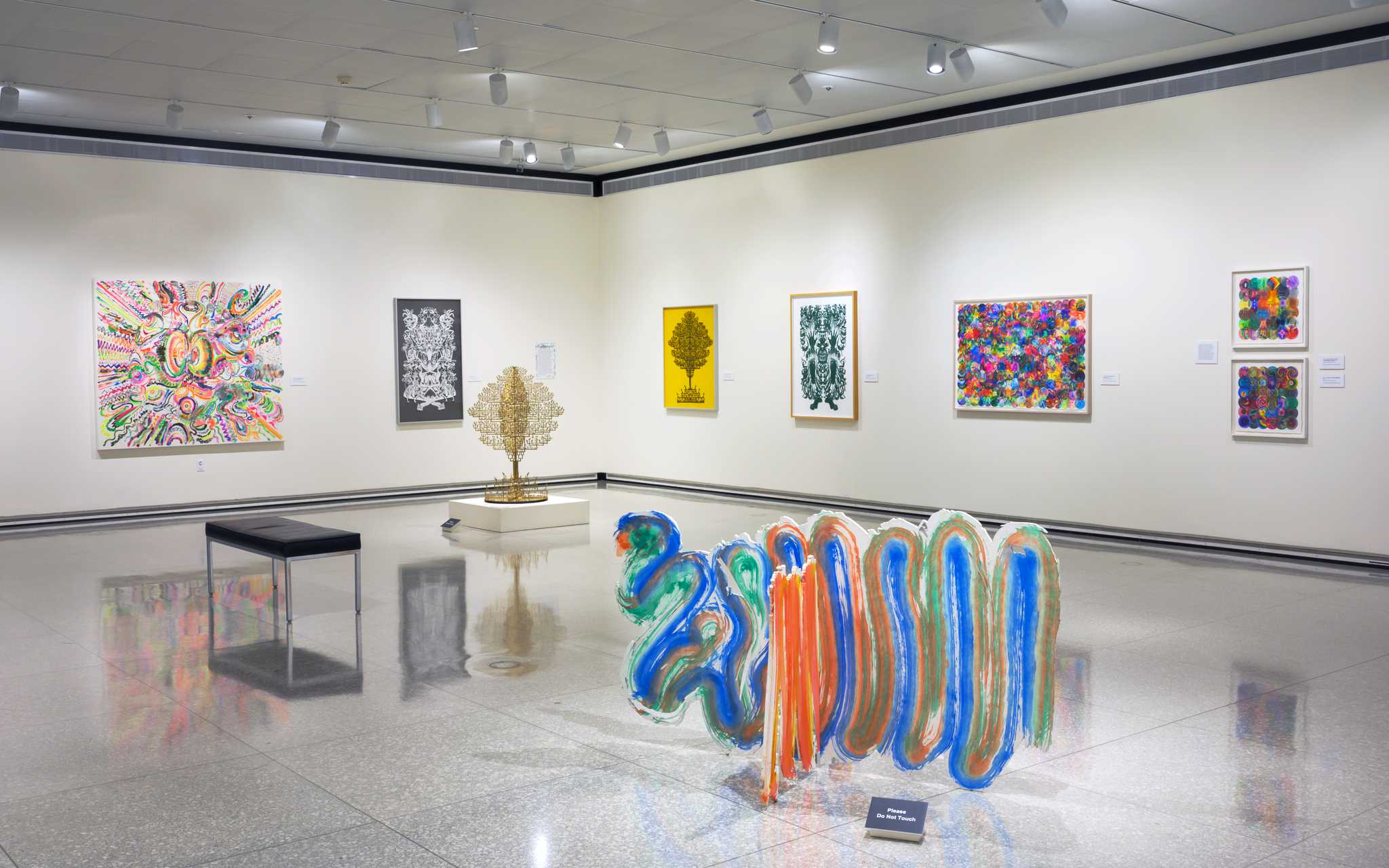
“A Bridge Between Two Worlds: Works by Wu Jian’an” Exhibition View ©️ Colleen_Woolpert
A Bridge Between Two Worlds: Works by Wu Jian’an
From Daydream to 500 Brushstrokes, Wu Jian’an’s intricate, dynamic, and compelling works place us at the intersection of countless times and spaces. Wherever one looks, there unfolds “an astonishing world opening from the body toward culture.” Can his art be understood as a kind of bridge? If so, what kinds of worlds does it connect?
The exhibition A Bridge Between Two Worlds: Works by Wu Jian’an, presented at the Kalamazoo Institute of Arts (KIA), offers a possible point of entry. Tracing the evolution of the artist’s practice over the past two decades, it guides viewers along the paths through which he moves between different worlds.
Masks and Faces
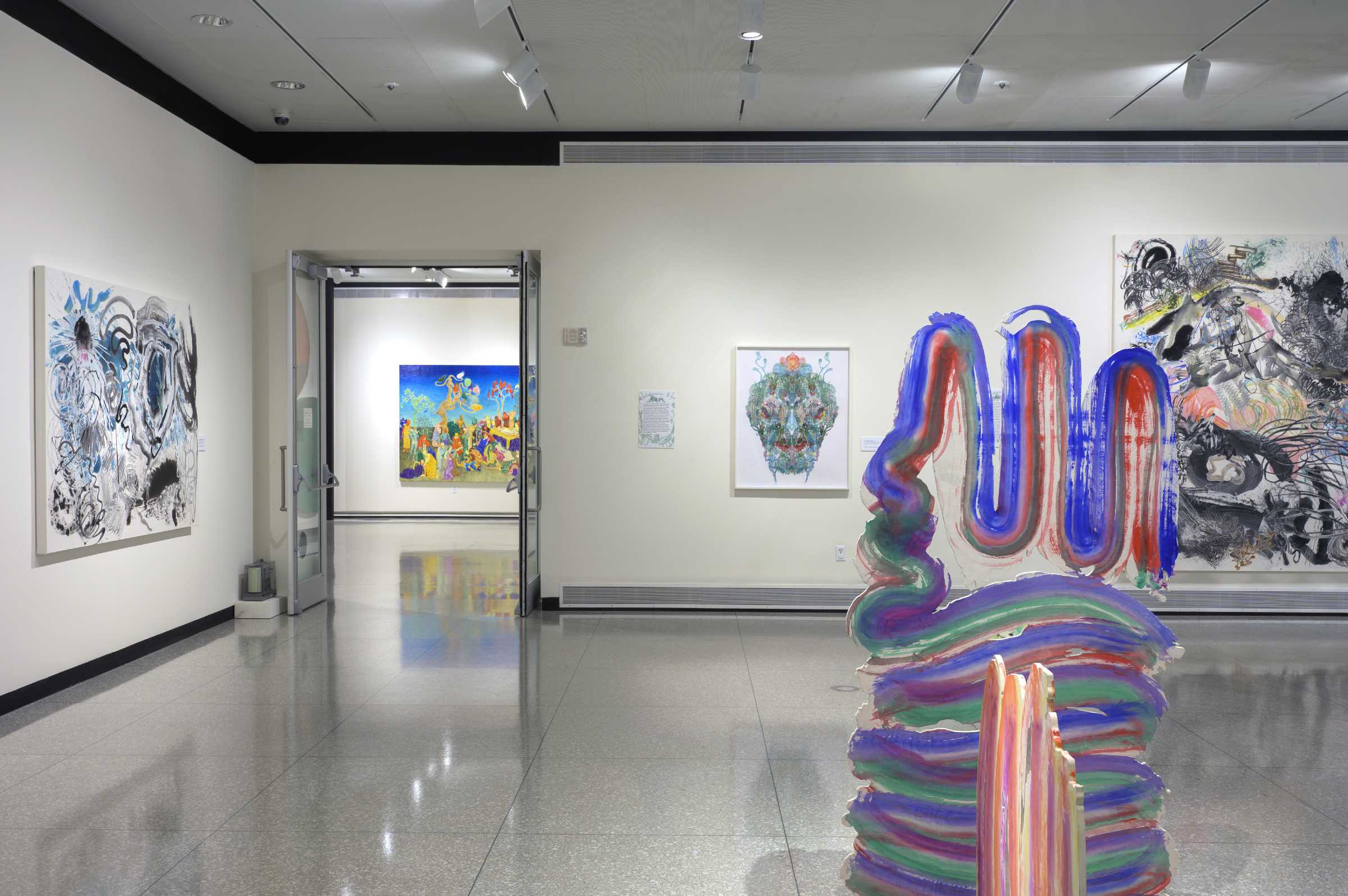
As Wu Jian’an’s first major solo exhibition at a museum in the United States, the exhibition is structured around six thematic sections: Daydream, Rainbow, Faces, Masks, Transformations, and 500 Brushstrokes. Moving beyond a chronological or linear narrative, the exhibition does not designate a clear beginning or end, nor does it impose a fixed sequence or rigid boundaries between sections. Through a carefully constructed spatial narrative, the exhibition’s curator, Rehema C. Barber, Curator of Modern and Contemporary Art at the Kalamazoo Institute of Arts, emphasizes the interweaving and resonance among works from different years, themes, and media, orchestrating a dialogue among several of the artist’s major series across the two principal gallery spaces.
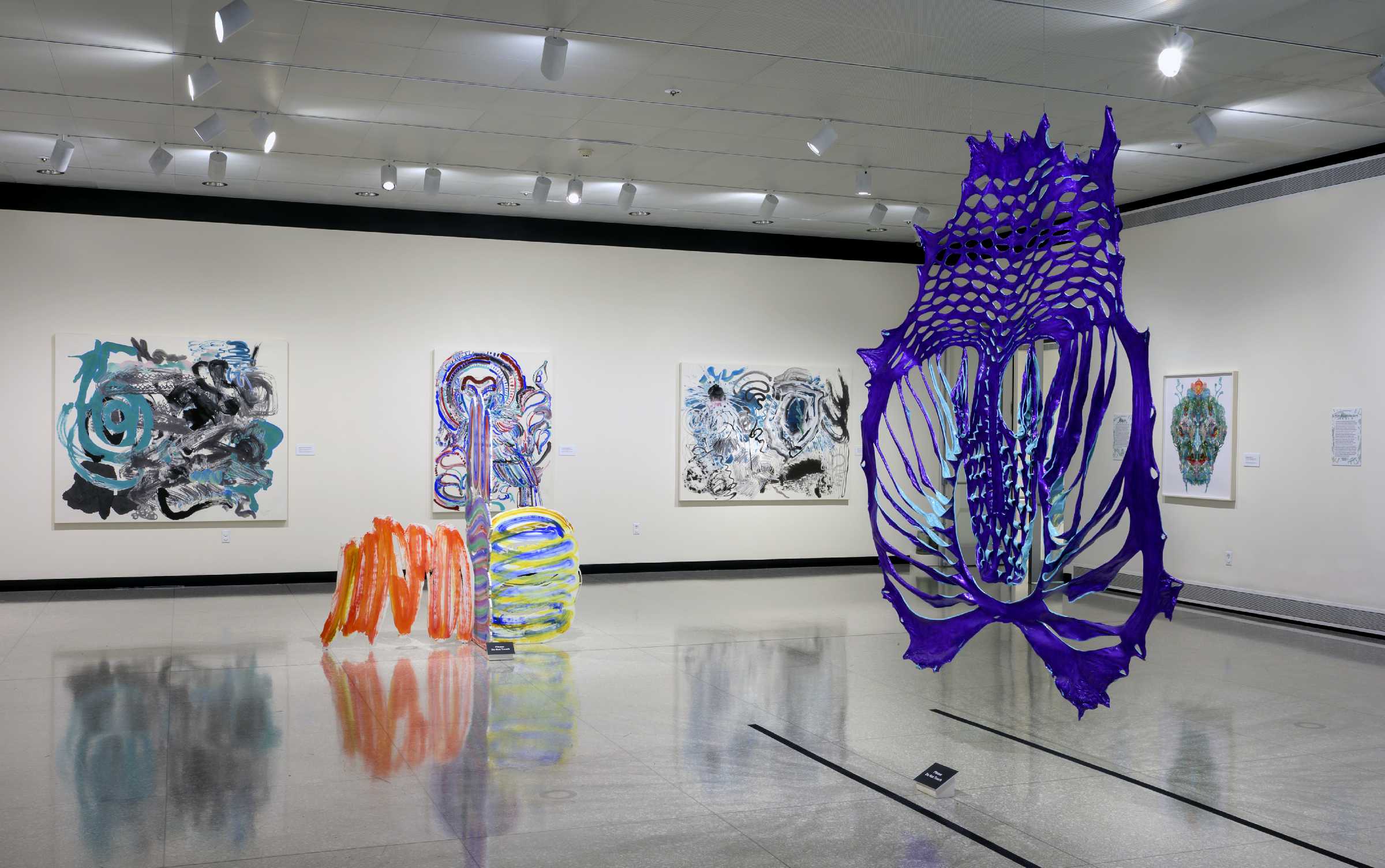
“A Bridge Between Two Worlds: Works by Wu Jian’an” Exhibition View ©️ Colleen_Woolpert
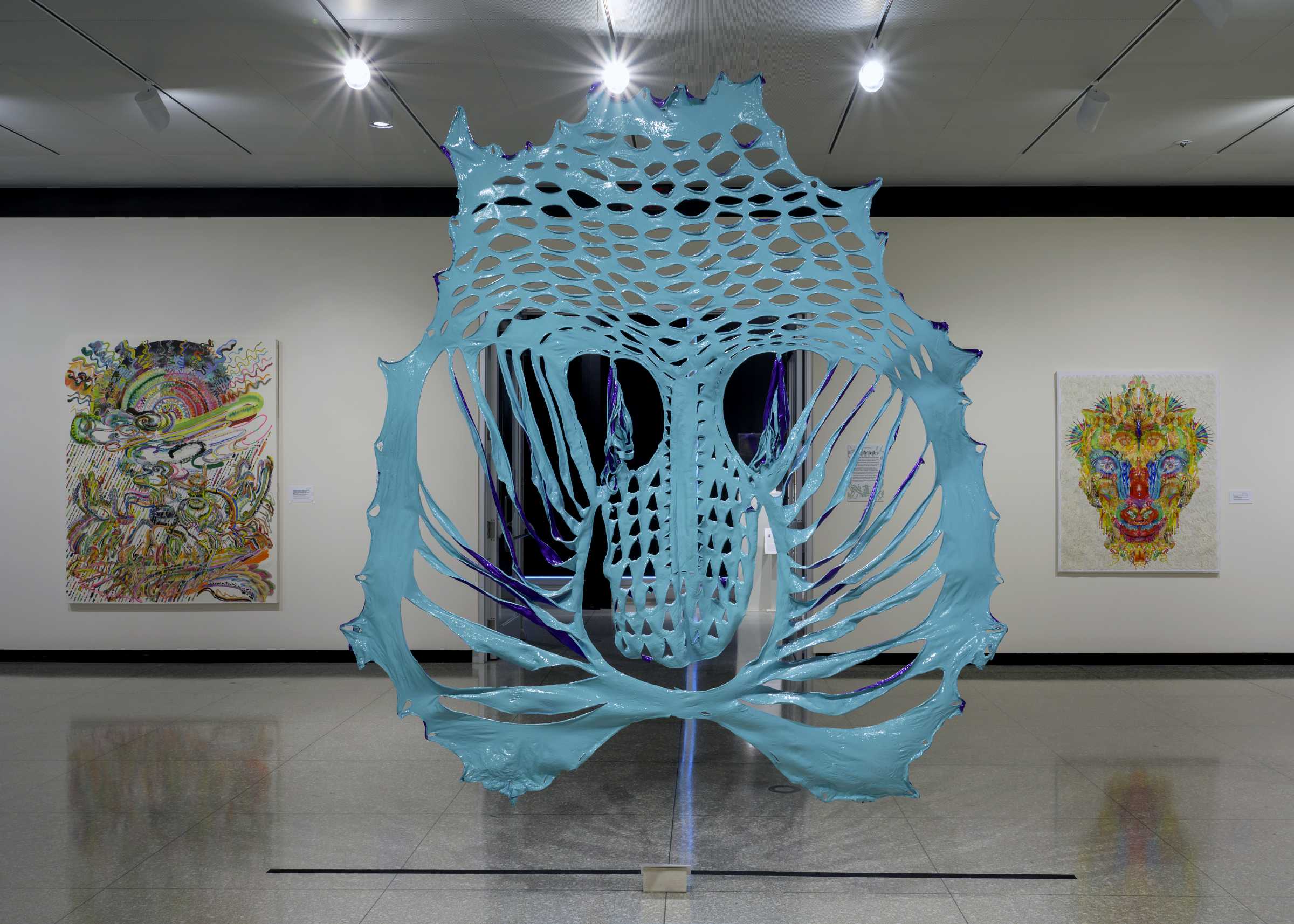
In the first main gallery space, several works from the Masks series are prominently suspended. Initiated in 2018, this series continues Wu Jian’an’s use of leather as a material, as well as his method of marking individual expression through carving. During the process, the artist makes incisions of varying sizes and shapes directly into softened, rehydrated reclaimed cowhide. As the leather dehydrates and dries, these deliberately made cuts become distorted and transformed, gradually taking on the appearance of masks reminiscent of ancient Maya and Mycenaean civilizations, or of facial totems abstracted and patterned in the Stone Age.
Vivid colors seem to “transform” the material itself, endowing the works with a sense of supernatural metamorphosis—transcending a medium destined to decay, and entering into a visual dialogue with past civilizations. At the same time, the works reveal the complex relationship between humans and nature, one of both struggle and cooperation. They also register a latent impulse toward intervention or destruction in human interaction with the external world, as well as the futility of such attempts: outcomes cannot ultimately be pursued, designed, imposed, or predicted, but can only be experienced through the complex processes of formation unfolding around us.
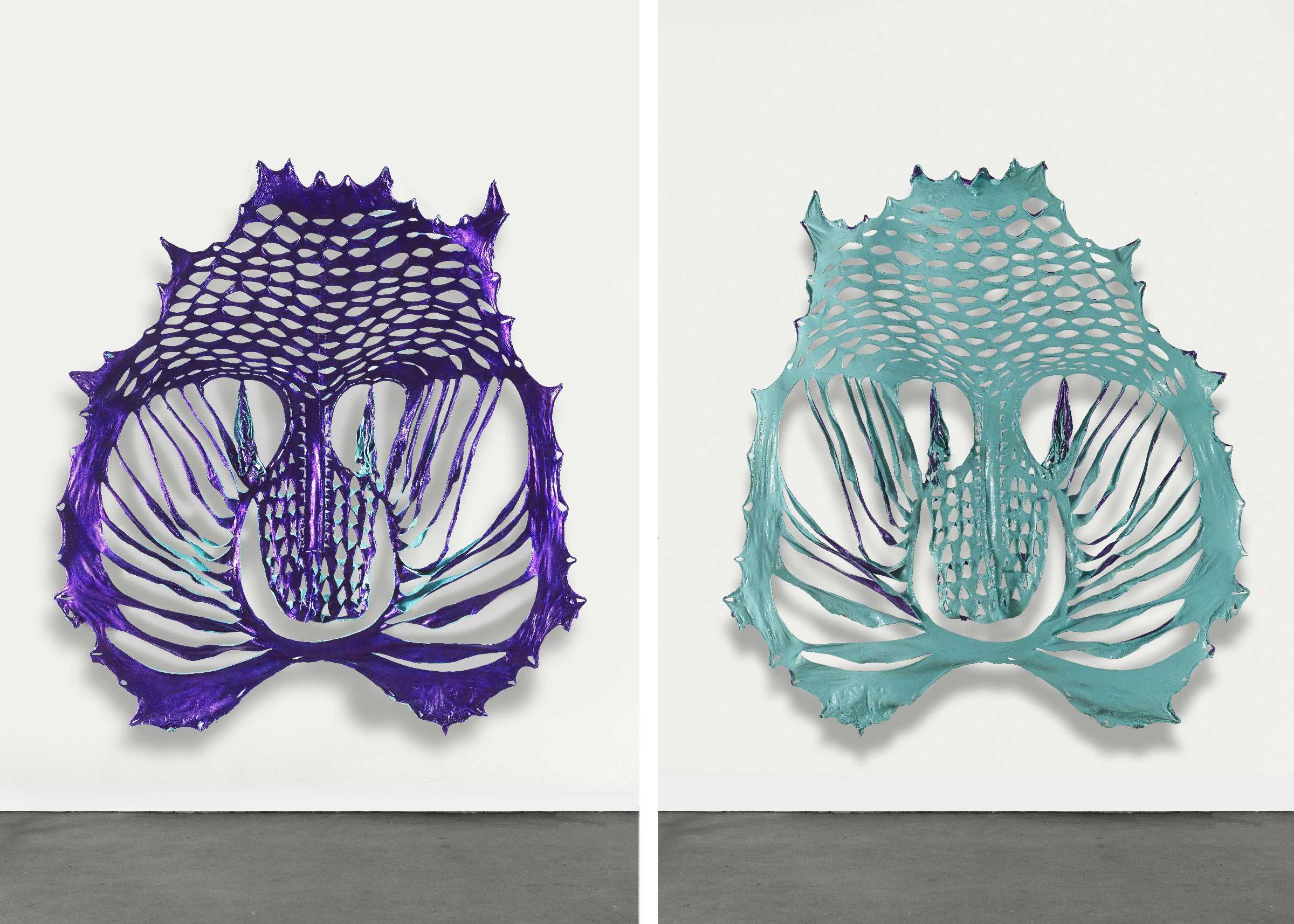
Masks-Purple Jade (Front & Back view), Buffalo hide, baking varnish, acrylic, 245 x 220 x 12 cm, 2018© Wu Jian’an
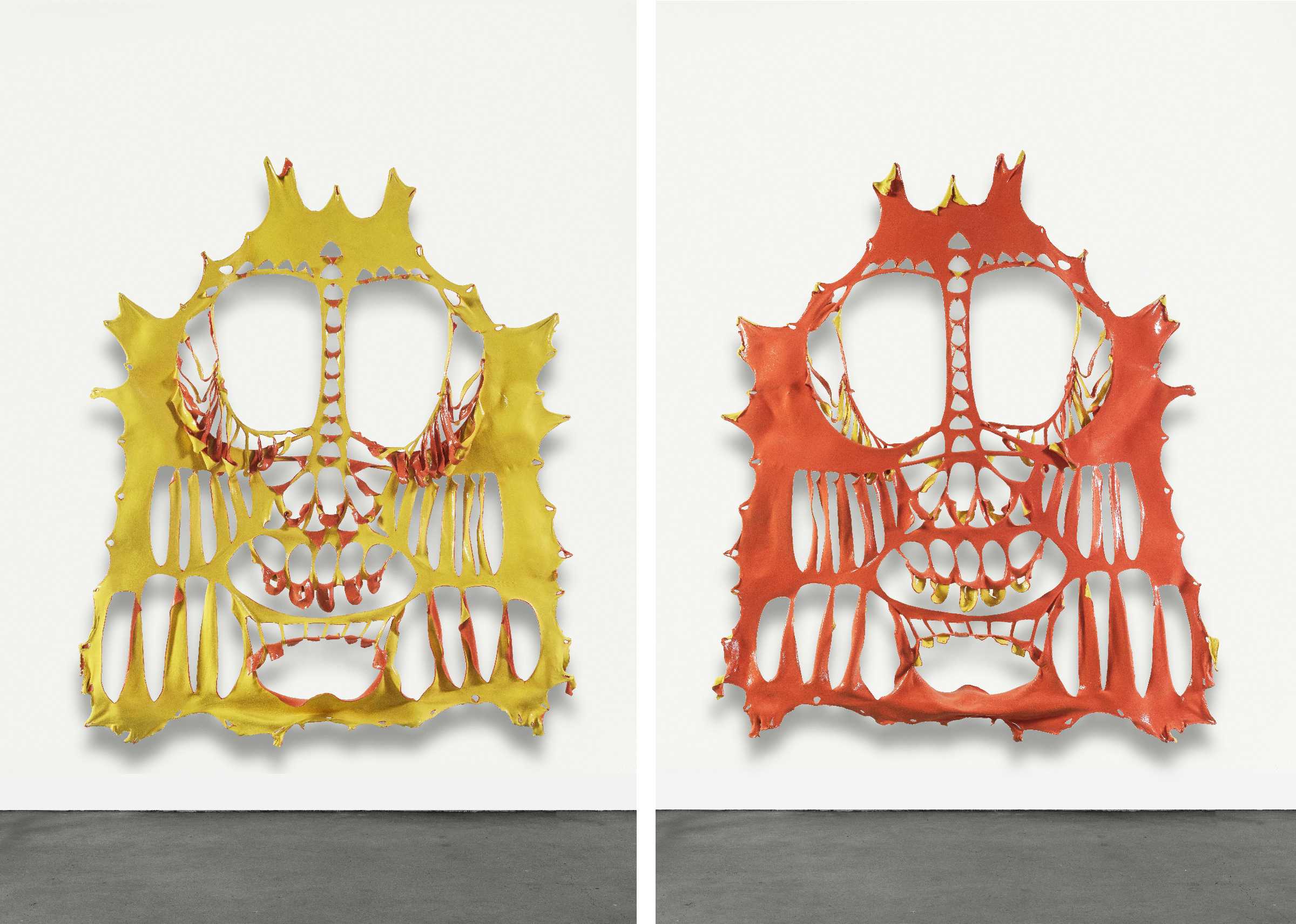
Masks – Gamboge (Front & Back view), buffalo hide, baking varnish, acrylic, 260 × 10 × 240 cm, 2018 © Wu Jian’an
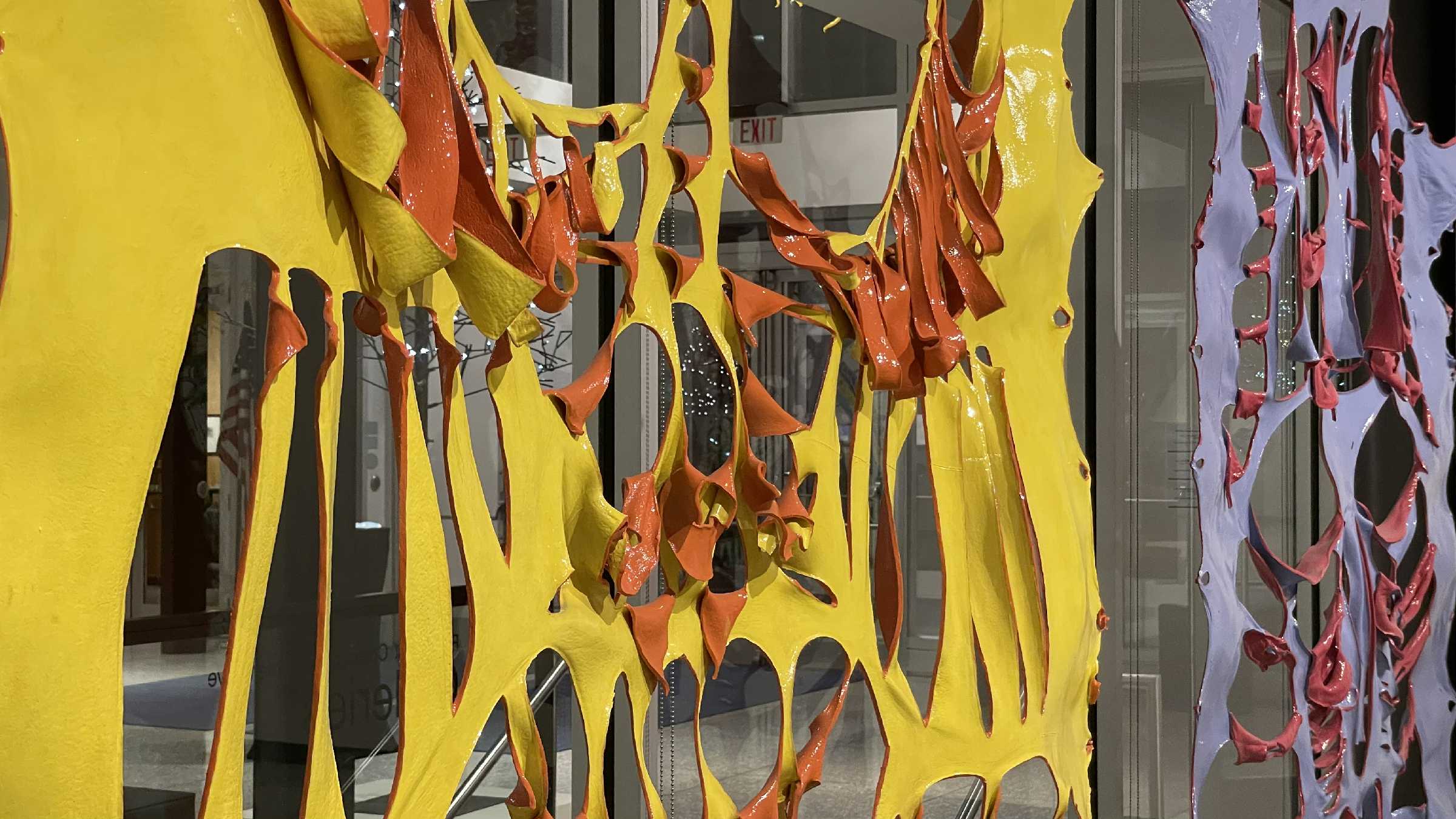
The Masks series (local), 2023 © Colleen Woolpert
In introducing Wu Jian’an’s representative Incarnation series, the exhibition adopts “Faces” as a key concept, continuing the artist’s exploration of “nature” through works such as Grasshopper and Divine Being. Among them, Grasshopper is the first work in the 2014 series Three Thousand Years of Smiling Faces. Each work in this series depicts a smiling animal face—Grasshopper, Mantis, Oriole, Cat, Wolf, Tiger, Vulture, Dung Beetle, Oriole, Snake, Mongoose, and Eagle—presented in progressively larger formats to form a layered food chain. Within this system, each animal that once occupies the top position is destined to become prey, while the repeated appearance of the “oriole” suggests that the food chain does not follow a single, linear path.
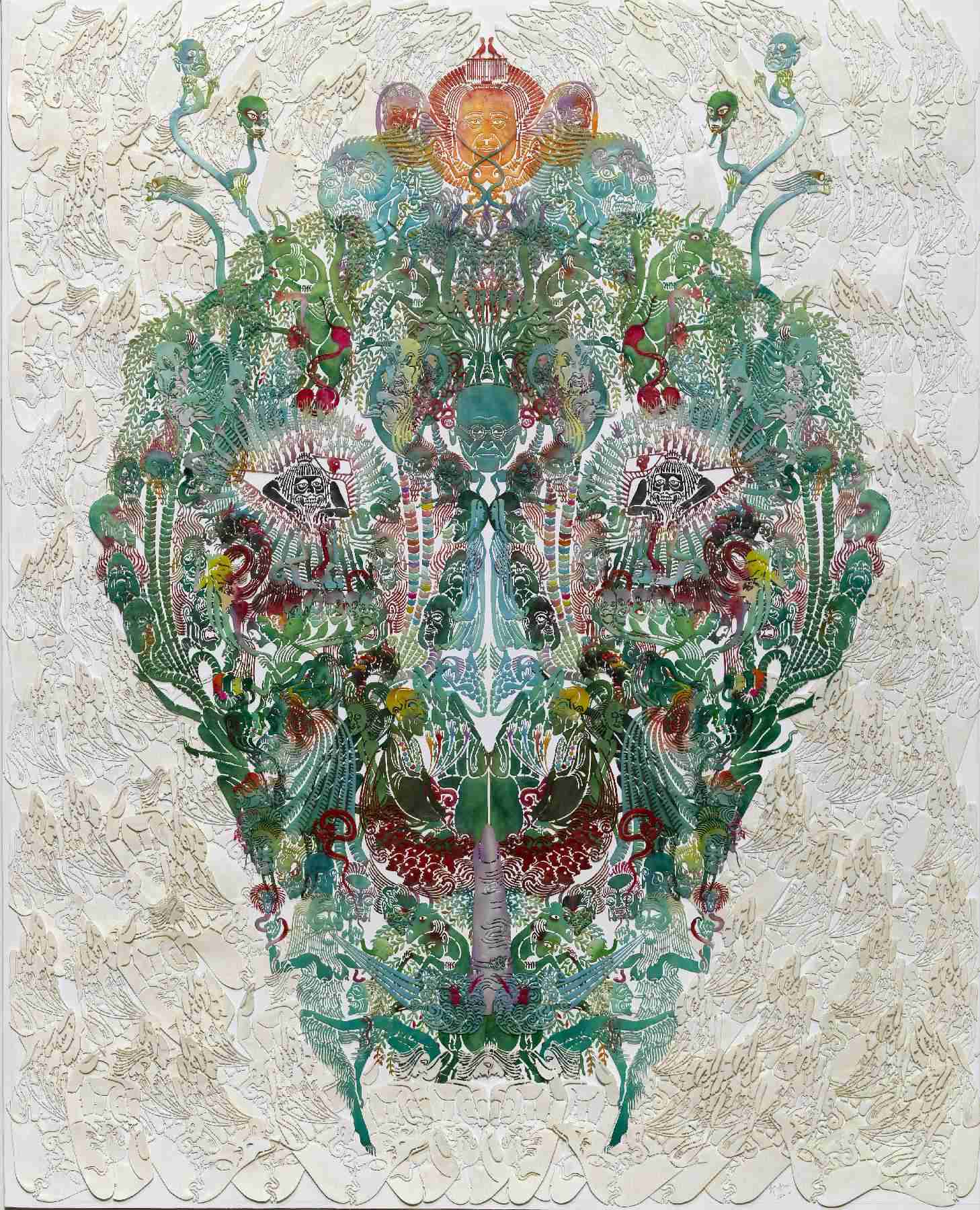
Grasshopper, Engraved on watercolor paper, watercolor, acrylic, soaked in beeswax,
cotton thread stitched and mounted on silk, 106 × 85 cm, 2014©Wu Jian’an
Similar to Divine Being (2020), the animal figures depicted in works such as Grasshopper are, to varying degrees, “evolved” into hybrid forms that combine human and animal traits. In fact, since The Heaven of Nine Levels (2009), animals in Wu Jian’an’s work have often been rendered with human attributes, or situated within the contexts of myth and legend.
As a result, they seem to possess a capacity to move between and mediate human and nature, reality and imagination. At the same time, they retain a sense of the primitive and the untamed—perhaps rooted in the formal traditions of folk art—infusing social behavior with a degree of “animality,” and opening up a line of inquiry into human–animal relations that moves beyond binary oppositions.
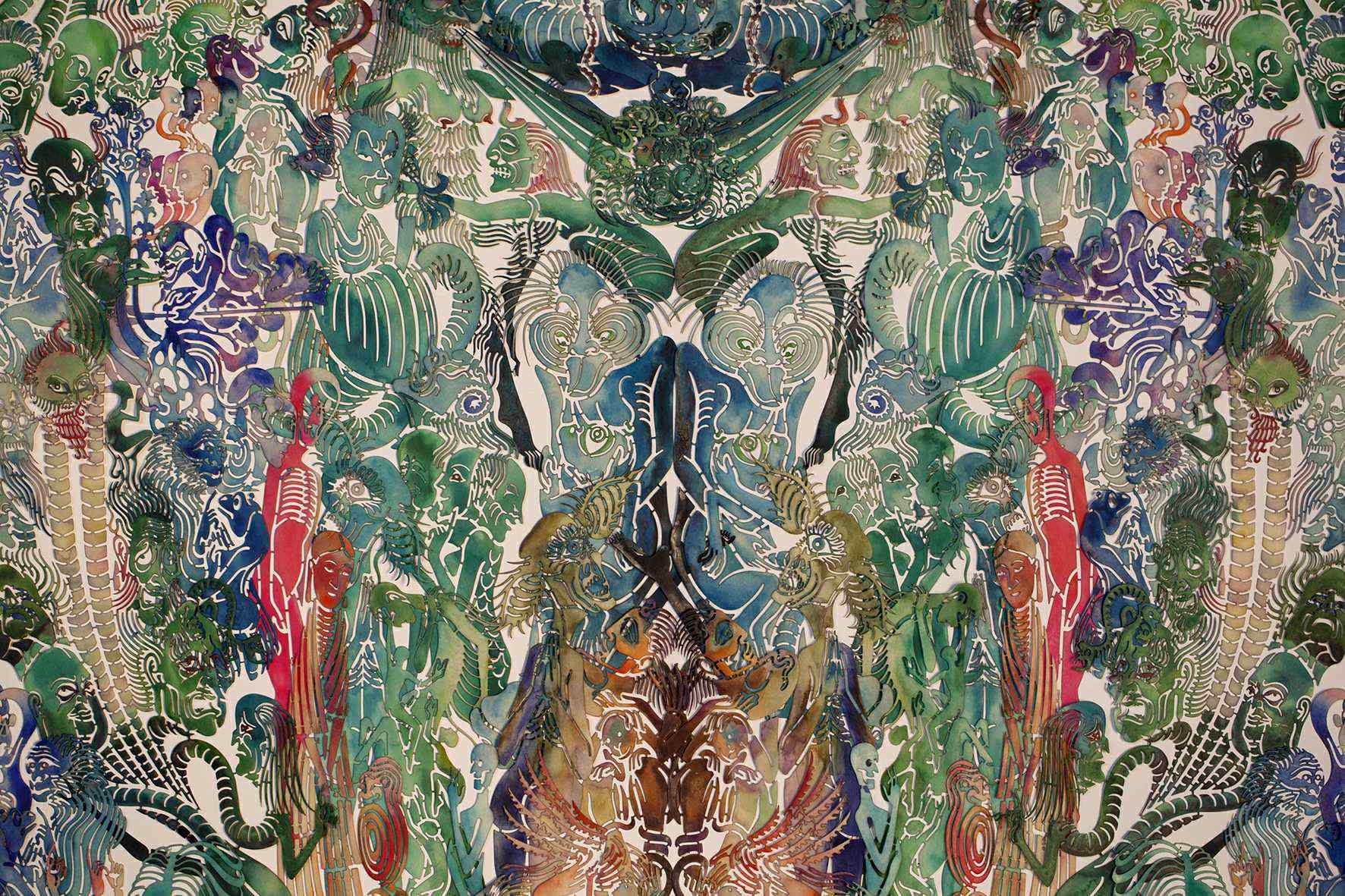
Faces -Grasshopper (local), 2014 © Wu Jian’an
Viewers familiar with the Incarnation series will quickly recognize that the animal portraits representing the natural order are composed of figures originally created by the artist in Seven-Layered Shell (2011). This collection contains 186 small figures, which can be grouped into seven categories: human organs, mythological or historical heroes, narrative adaptations of classical stories, physical or social behaviors, figures from literary works, metaphorical objects, and fantastical demons.
These “little figures” vary in number, color, and placement across different works, functioning like cells in a body. Together, they gaze—alongside the smiling animals they form—at their prey and at us. In this sense, Seven-Layered Shell can be regarded as the artist’s visual dictionary. The numerous Incarnation works derived from it repeatedly explore how a single prototype can take on multiple forms in different contexts, suggesting that the reality we inhabit is itself part of an ongoing cycle.
500 Brushstrokes and Infinite Paintings
Through repeated connections between natural forms and materials, and “man-made” elements such as classical texts, historical narratives, and mythological stories, Wu Jian’an’s artistic practice embodies his enduring pursuit of the theme of reflective thought. Over the course of his sustained and evolving practice, his inquiry into the relationship between the individual and the collective gradually emerges, culminating in the 500 Brushstrokes and Infinite Paintings series as another expansive and profound discussion.
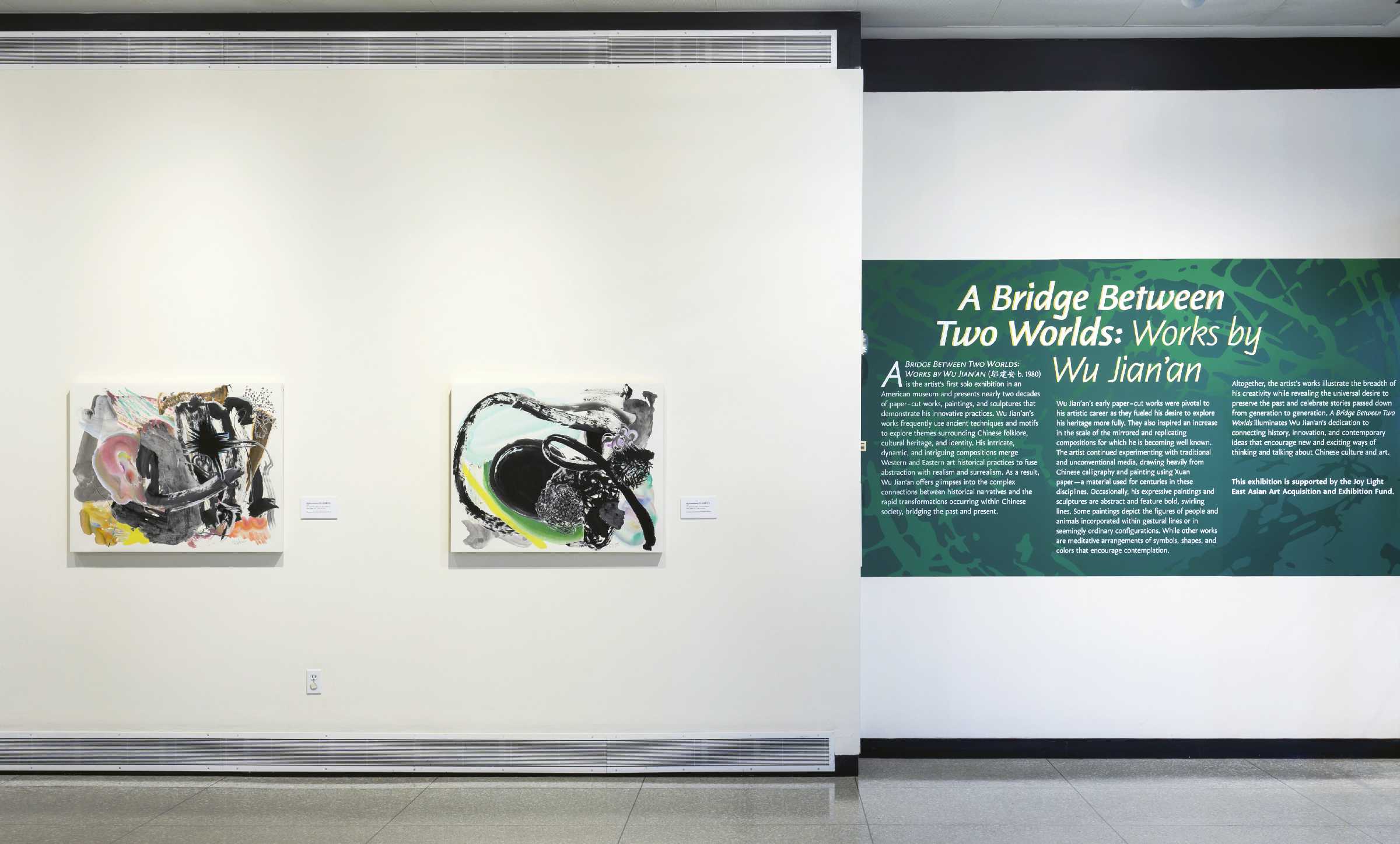
“A Bridge Between Two Worlds: Works by Wu Jian’an” Exhibition View ©️ Colleen_Woolpert
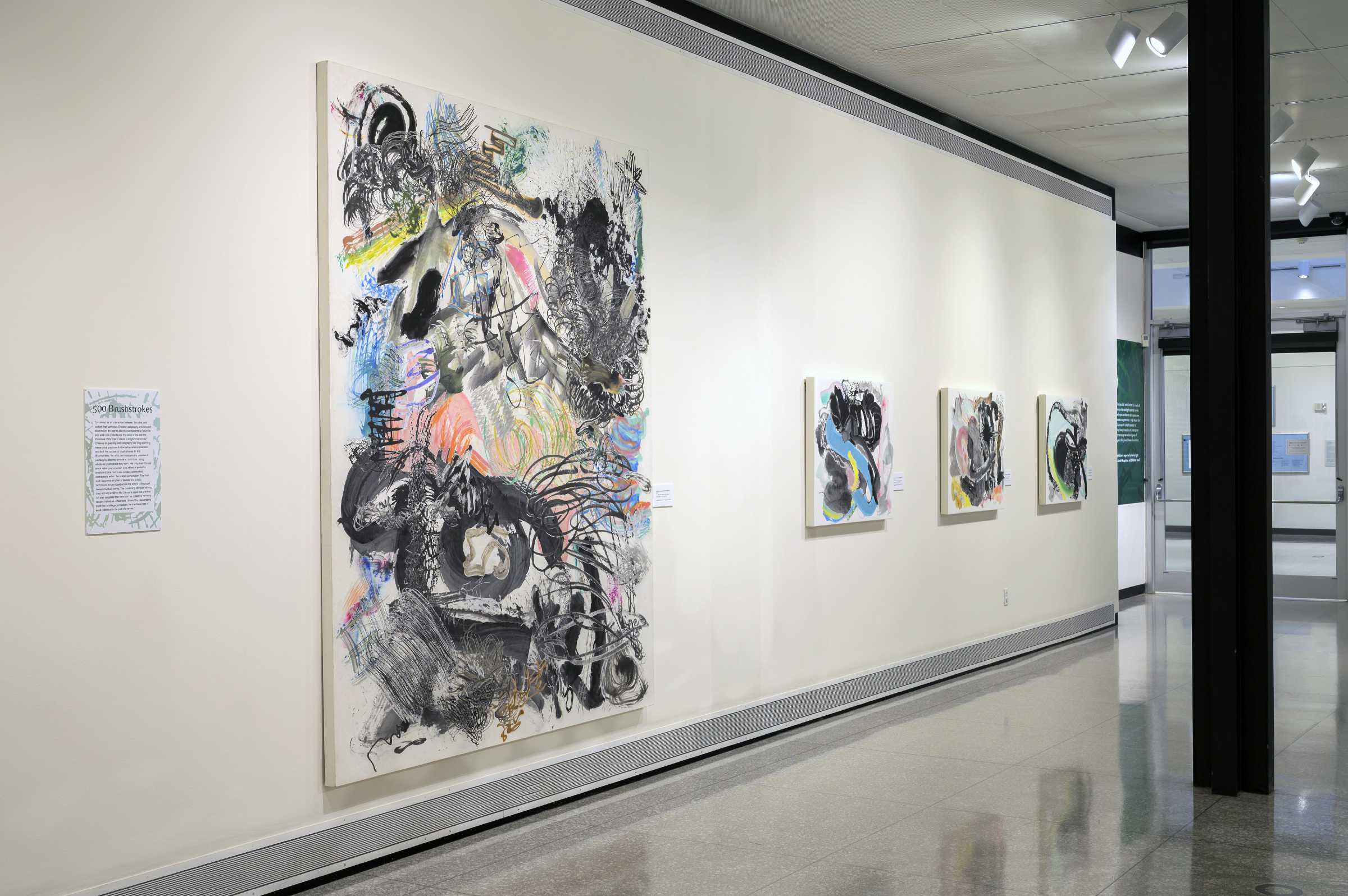
In the 500 Brushstrokes series, initiated in 2016 and ongoing to the present, the artist gradually developed two approaches to generating brushstrokes. The first involves spontaneous experiments with brushstrokes carried out in the studio, while the second takes him outside the studio into public spaces to “collect” brushstrokes. The endless studio experiments record the artist’s body, emotions, and gestures at different moments in time—fleeting “psychological portraits” preserved on xuan paper through various sizes of brushes, ink, and mineral pigments. From this vast “ocean of brushstrokes,” the artist then selects and assembles marks to create each individual 500 Brushstrokes composition.
Brushstrokes contributed by specific groups of people greatly expand the public dimension of the works. The artist either actively visits or is invited to different regions and communities in China and abroad, organizing workshops to collect a single, freely drawn stroke from each participant. When assembled, these strokes form an abstract collective portrait of that particular group. As the artist explains, “When I create on a large sheet of paper, it’s as if I am standing among a crowd of people.”
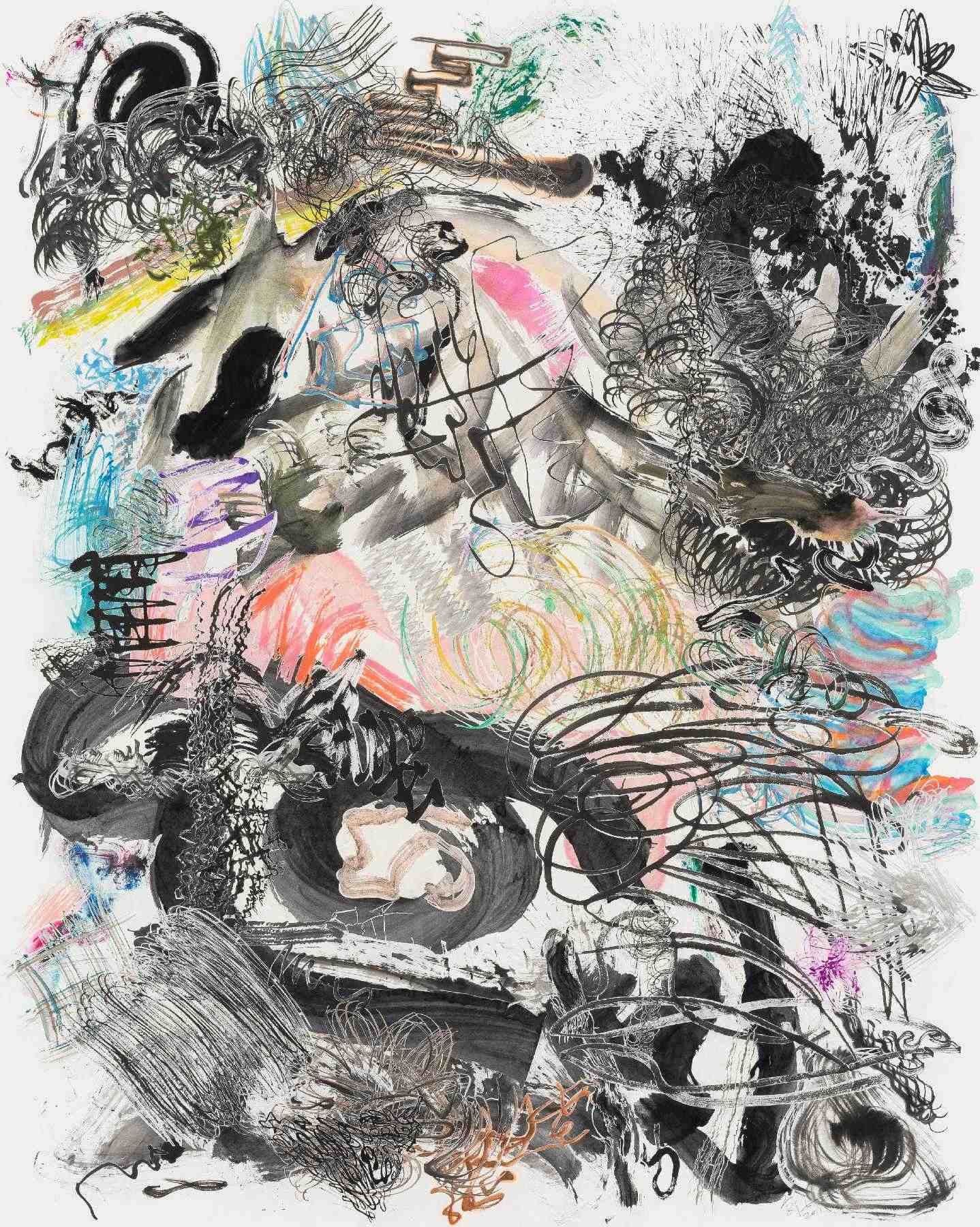
500 Brushstrokes #25, Ink, watercolor, paper cut and collage on Xuan paper, 250x200cm, 2017© Wu Jian’an
This exhibition focuses on the 500 Brushstrokes series that the artist has been developing in his studio since 2016. Undoubtedly, these visual experiments—using “myself” as the model—form the foundation for Wu Jian’an’s later, more complex explorations of collective brushstroke composition, allowing him to delve deeper into the possibilities of the relationship between individual and group order—a theme also central to his Incarnation series.
As the exhibition curator, Rehema C. Barber, observes, this series “continues the traditions of Chinese calligraphy and Western gestural painting while further loosening the demands for precision and control over quantity… When these unique individual writings, imbued with projections of the inner world, are aggregated, they suggest that despite individual differences, a form of harmony can still be achieved. The same holds true for the self.”
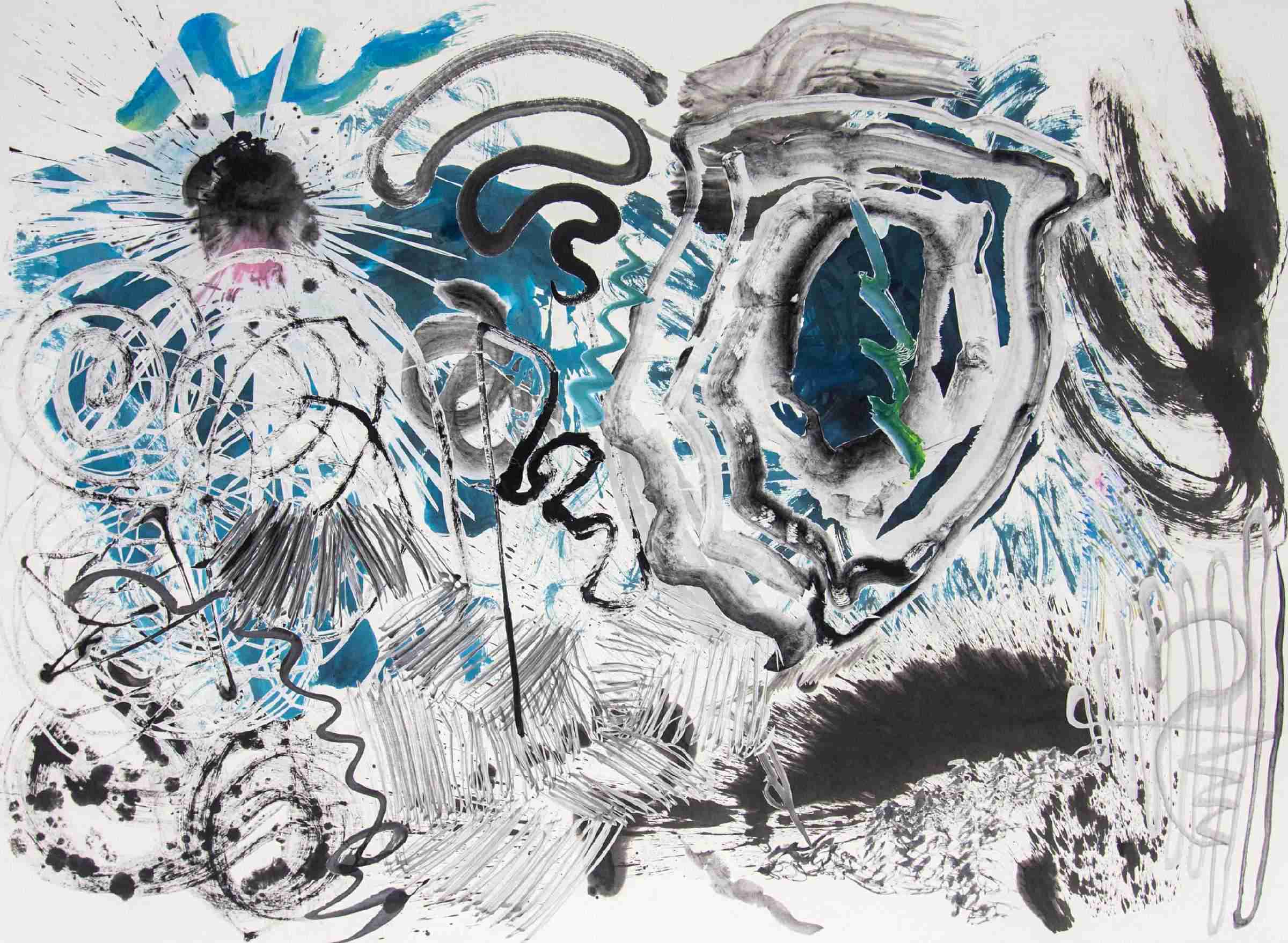
500 Brushstrokes #56, Ink, watercolor, paper cut and collage on Xuan paper, 145x200cm, 2019© Wu Jian’an
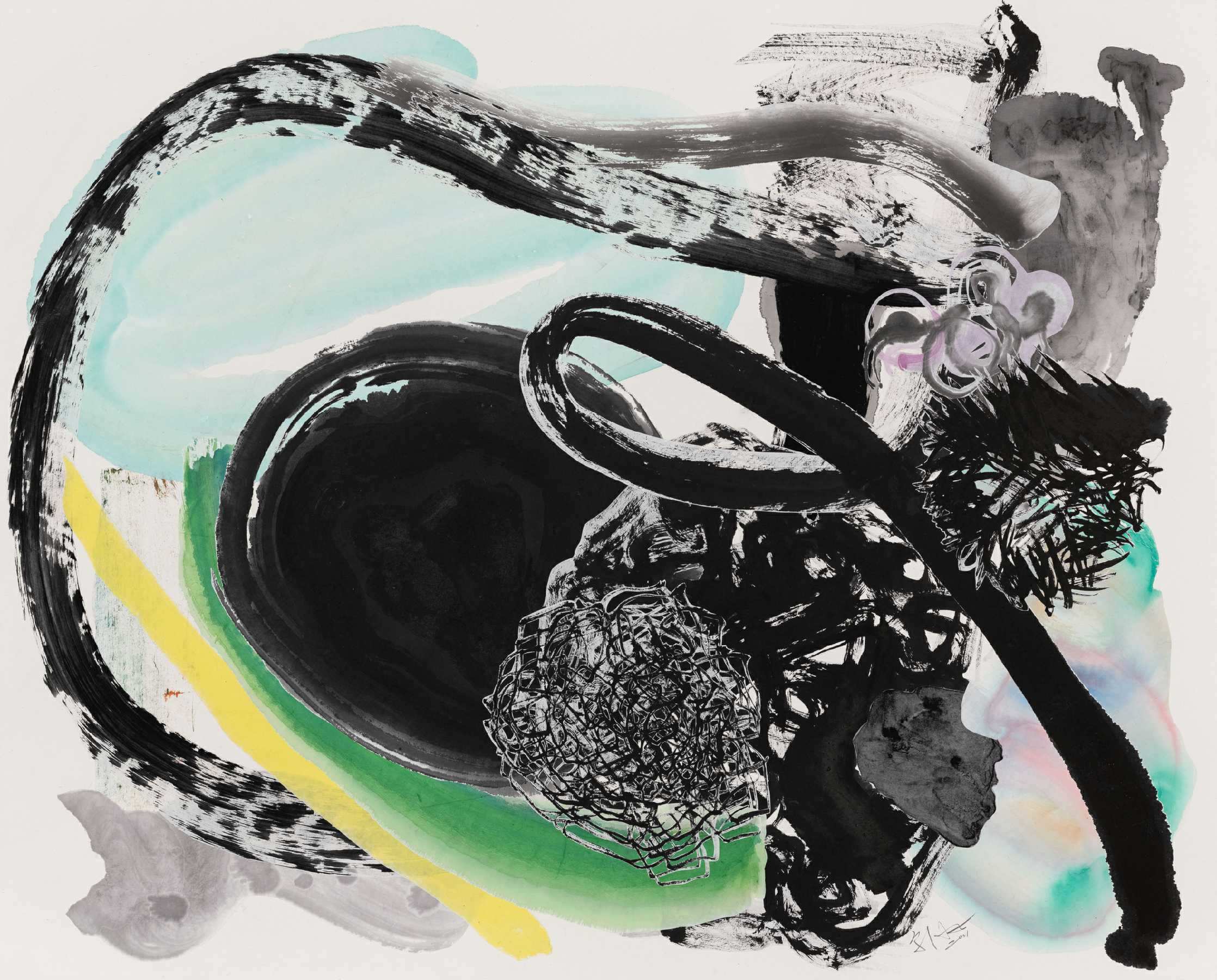
500 Brushstrokes #73, Ink, watercolor, paper cut and collage on Xuan paper, 120x160cm, 2021© Wu Jian’an
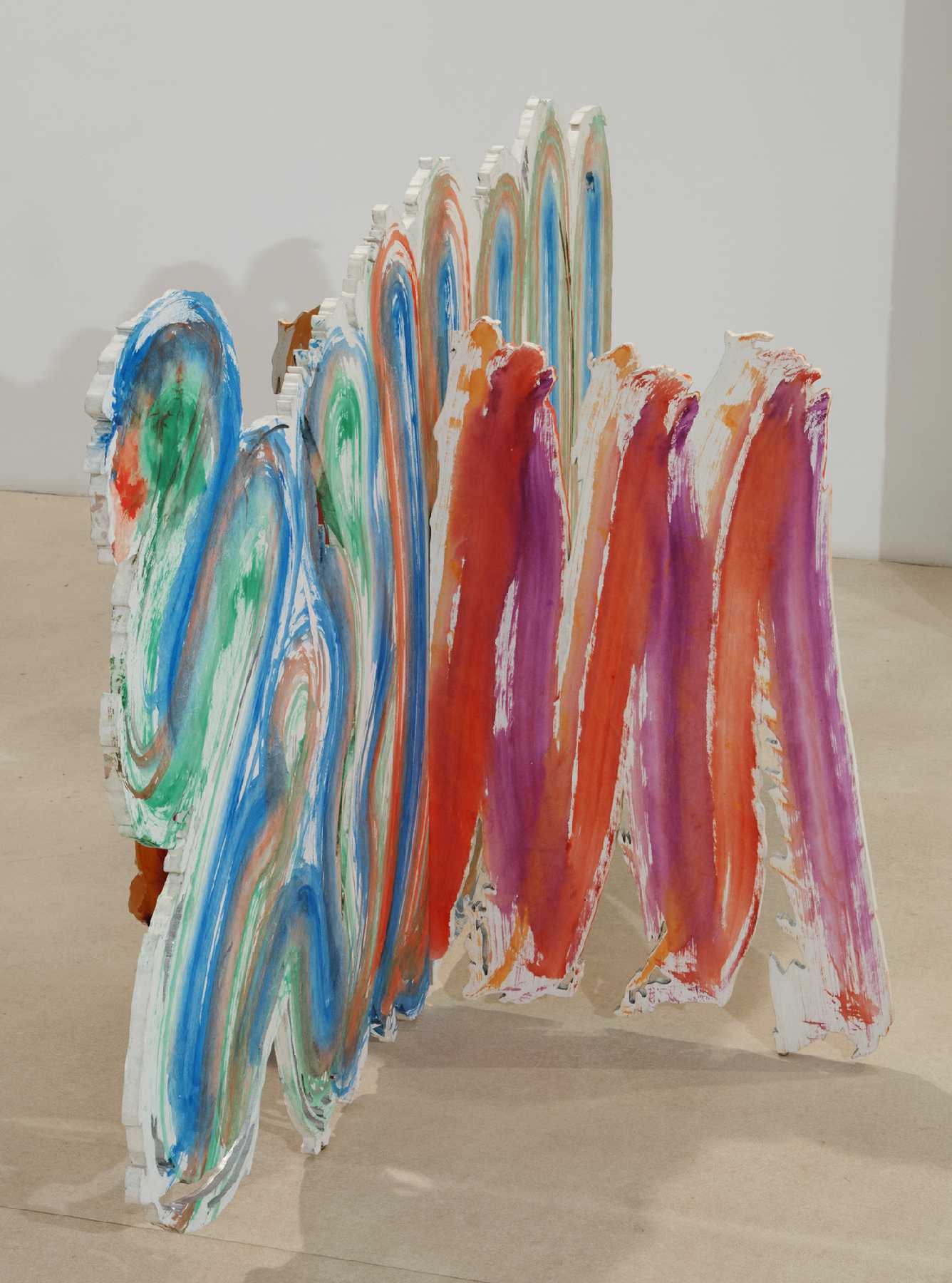
500 Brushstrokes-Flying Snake, Ink, watercolor, paper cut and collage on Xuan paper, aluminum alloy, 180x112x23cm, 2016© Wu Jian’an
In the Infinite Painting series, the artist partially returns the exploration of “individual and collective relationships” to the realm of imagery. He begins by creating a clear figurative line drawing on a sketch, then breaks down every point and line in the composition into hundreds of individual painting units. These smallest units of a painting are treated as independent entities and redrawn, ultimately cut and collaged back into their original positions.
In this process, each unit is granted significant freedom, generating an overall composition rich in intricate detail. From a distance, the figurative forms—sun, storm, clouds, various animals and figures—can still be discerned. Yet the individual units that compose them resemble both the cells of marine organisms and the nebulas of the cosmos. Each abstract shape and color transcends its literal representation of sun, rain, or clouds, pointing instead toward the act of painting itself, the materiality of the medium, and the interplay of conscious and subconscious gestures.
Through the cycle from figuration to abstraction and back to figuration, the individual units are freed from functional or identity constraints, entering a purer realm of self-exploration and expression. The overall work thus retains a cohesive integrity while opening onto infinite possibilities for diversity and potential multiplicity.
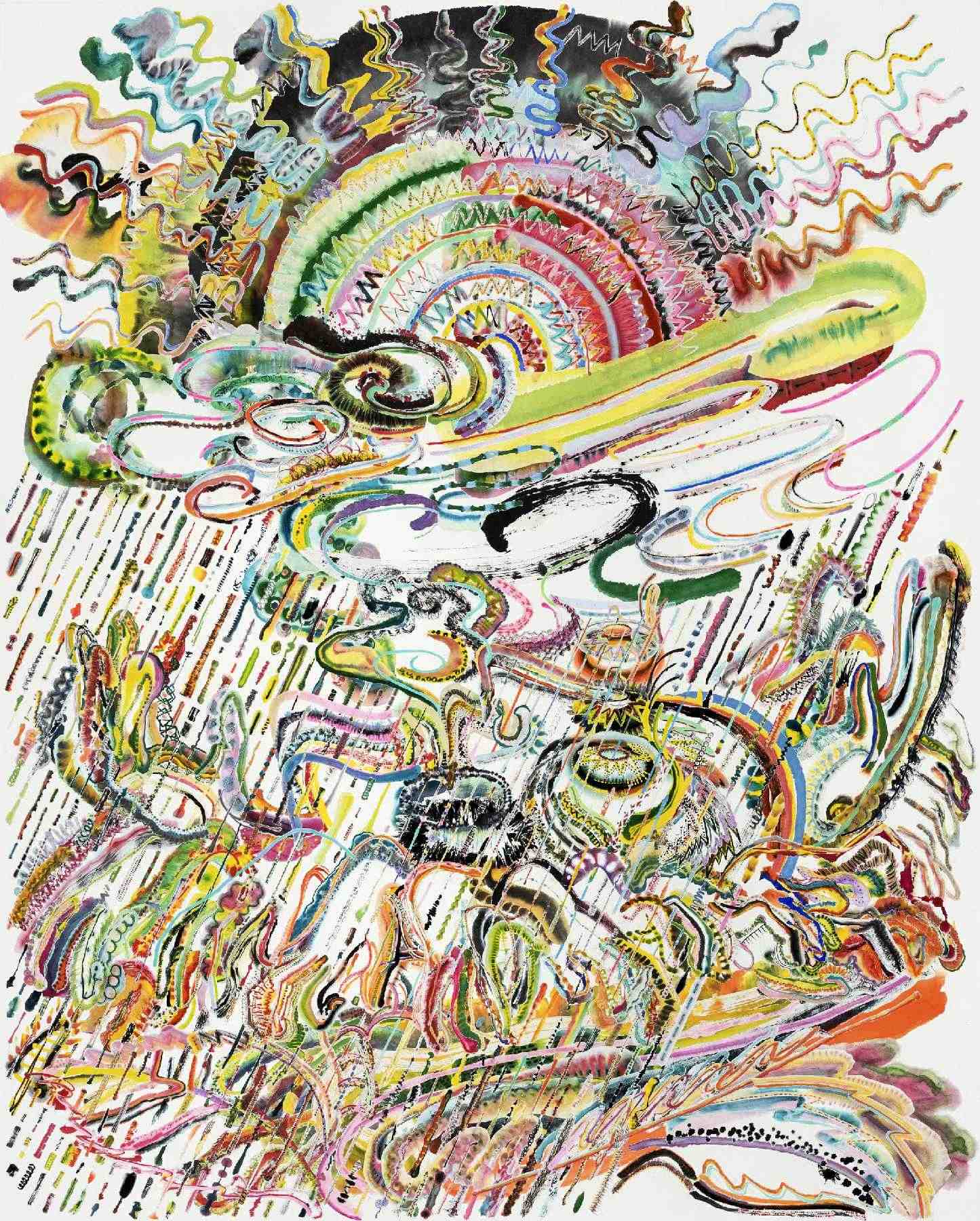
Breathing in clouds to make it rain and breathing out clouds to let the sun out,Ink, watercolor, acrylic, paper-cut and collage on Xuan paper, 200x160cm, 2019 ©Wu Jian’an
Daydream, Rainbow, and Transformation
Obsessed with drawing inspiration from cultural traditions and folk experience, Wu Jian’an translates, creates, and collects countless images of spirits and marvelous beings. By evoking an instinctive curiosity for distant legends encoded in our genes, he explores themes of folklore, visual heritage, and identity. This inquiry lies in a kind of “subconscious” state within his early works. Interestingly, in recent years, these topics have also emerged as a notable focus in international curatorial practice at major biennials.
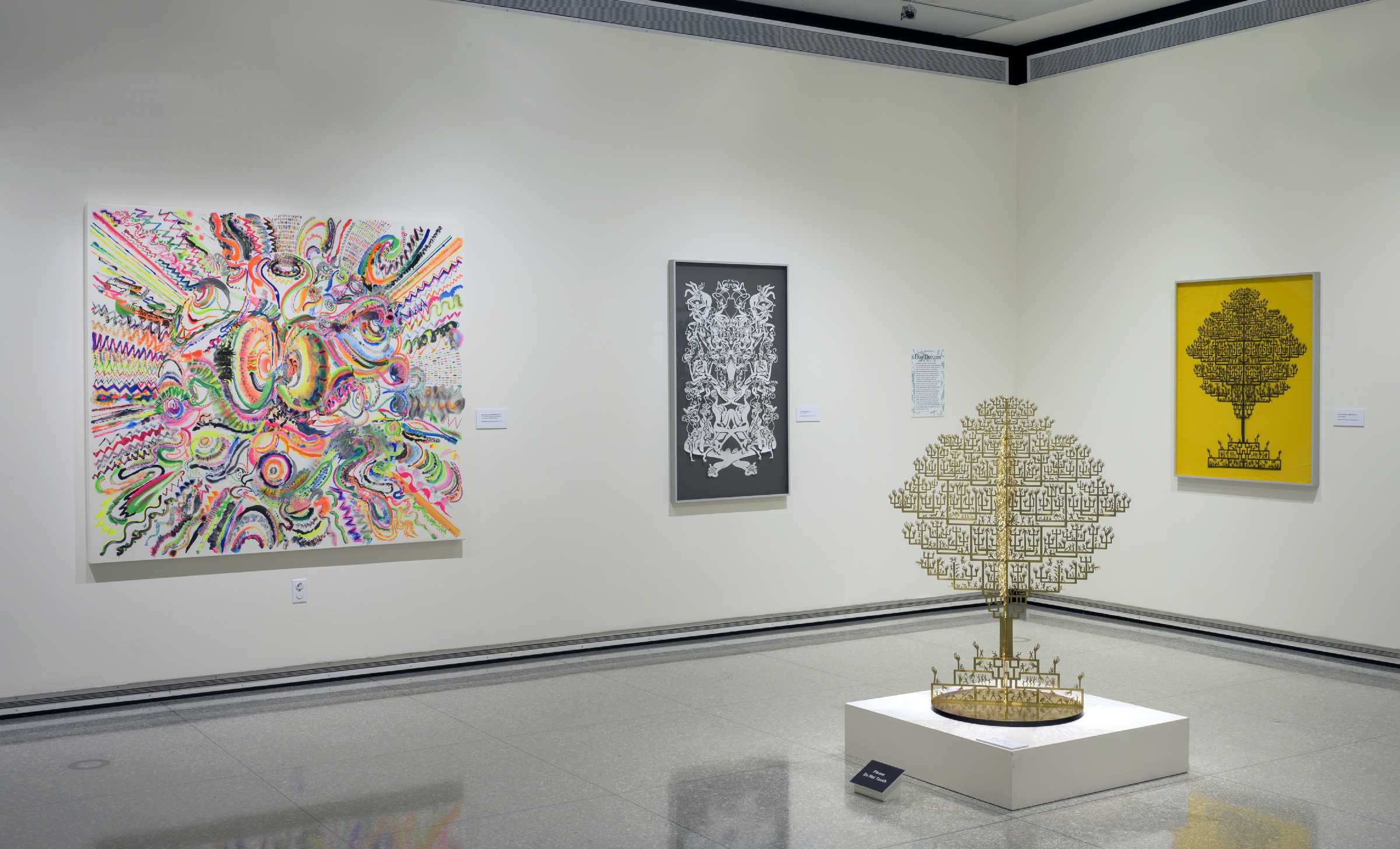
“A Bridge Between Two Worlds: Works by Wu Jian’an” Exhibition View ©️ Colleen_Woolpert
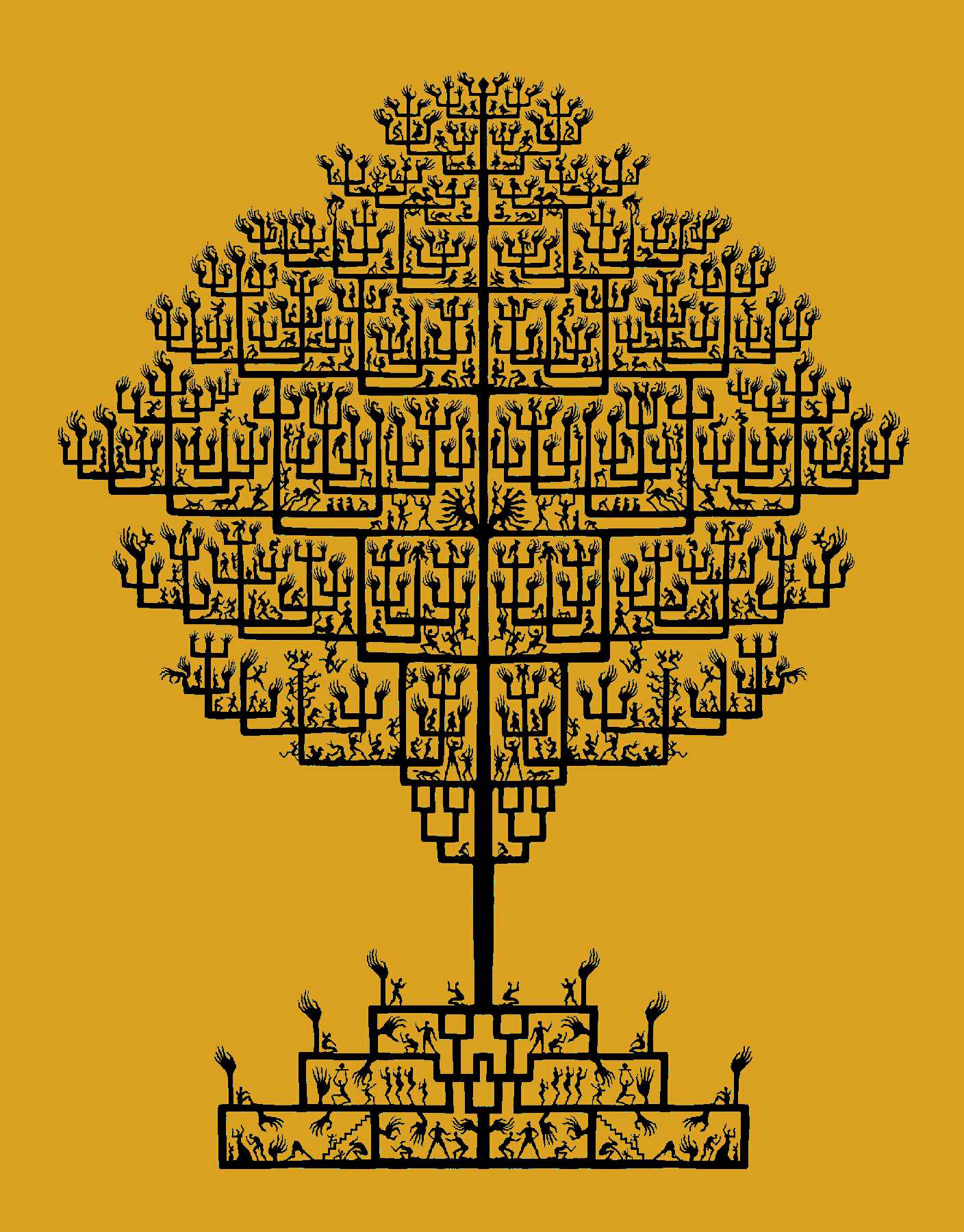
Harvest of Power, Xuan paper-cut, 136 × 77 cm, 2016©Wu Jian’an
The second main gallery presents works from the early period of the artist’s practice. In 2003, Wu Jian’an created more than twenty fantastical paper-cut pieces, Daydream, on the floor of his cramped dormitory. He used the painstakingly intricate repetition of cutting as a way to ease anxiety and loneliness. Outstretched limbs and flowers signify vitality, twisted bodies suggest constraint and suppression, pointing arms symbolize confidence or power, birds represent wisdom, human-headed serpents or long-tailed creatures reference “traditional culture,” and monkeys stand in for the artist himself… These specific symbols, through repetition and symmetry, extend into new “organs,” connecting the limitations of the personal body with ephemeral thoughts. The works act as slices of the self, and as a form of spontaneous, self-directed healing.
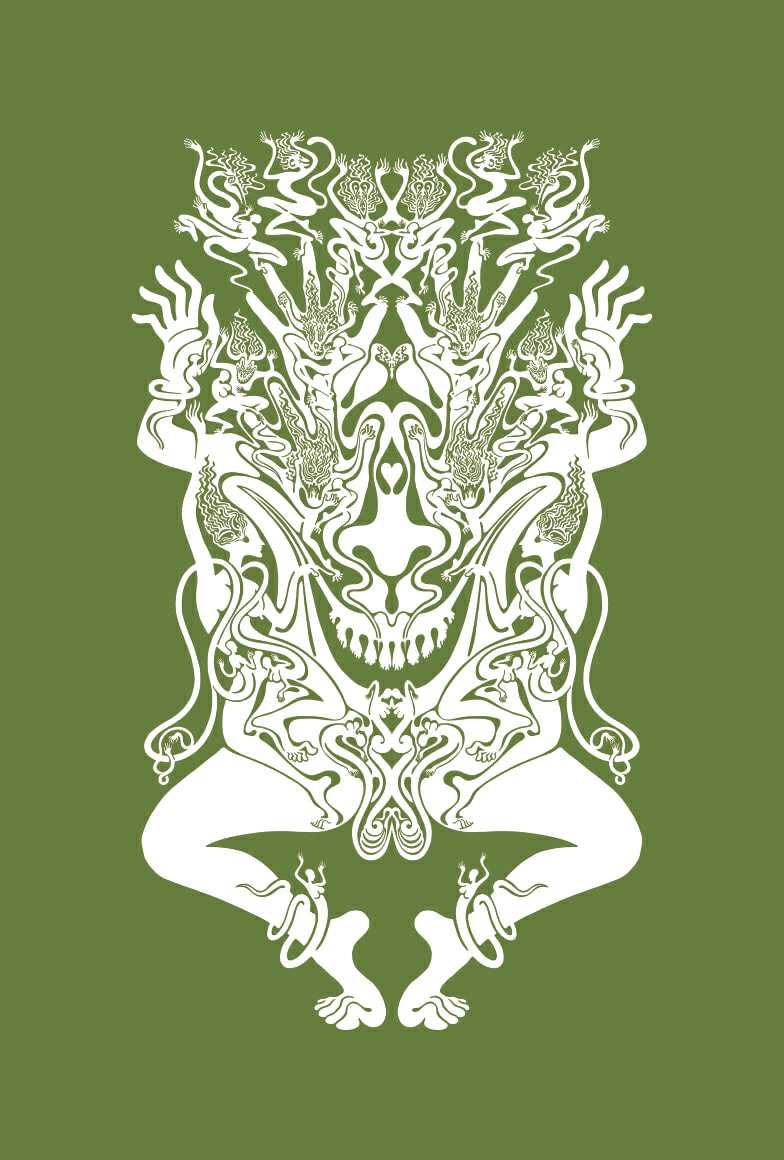
The Way of Expelling Ghosts,Xuan paper-cut, 136 × 77 cm, 2016©Wu Jian’an
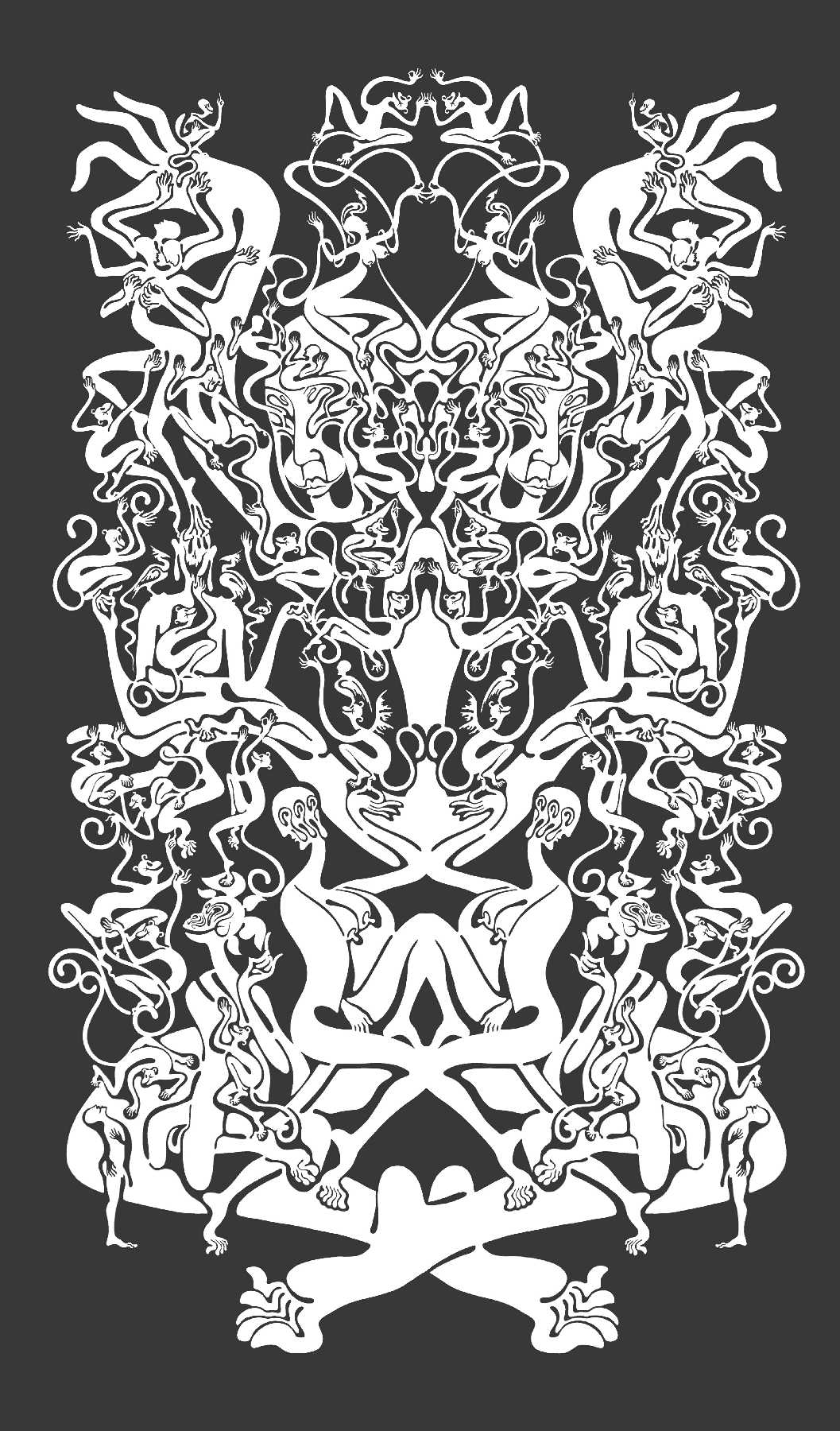
Calmly Observing,Xuan paper-cut, 136 × 77 cm, 2016©Wu Jian’an
In the Rainbow series, also produced through meticulous handcrafted labor, human forms are constructed from layers of rainbow-colored paper. The ribbon-like cutouts resemble thermal images, revealing muscles, veins, and even vital energy, with the layered stacks giving rise to vivid and lifelike bodily forms. Small, fantastical creatures inhabit this cloud-like dreamscape. The clouds, existing between the material and immaterial, symbolize a unifying force between humans and the natural world. For Wu Jian’an, tradition is a living entity, and he may be one of its chosen hosts, carrying it forward in the contemporary world through the medium of art.
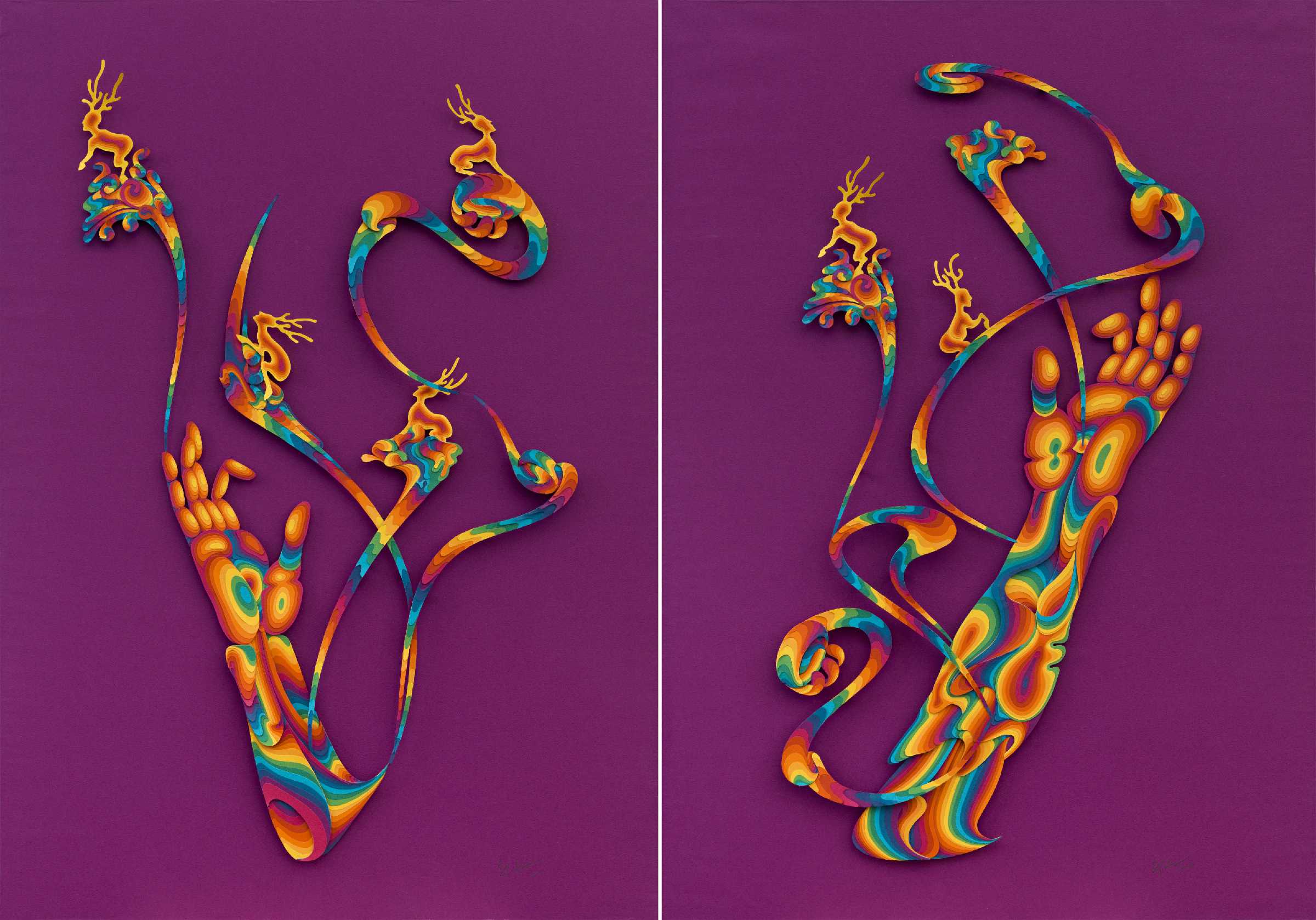
Rainbow Clouds – Purple Aura, Collage on specialty paper, each 89 × 64 cm, set of two, 2012©Wu Jian’an
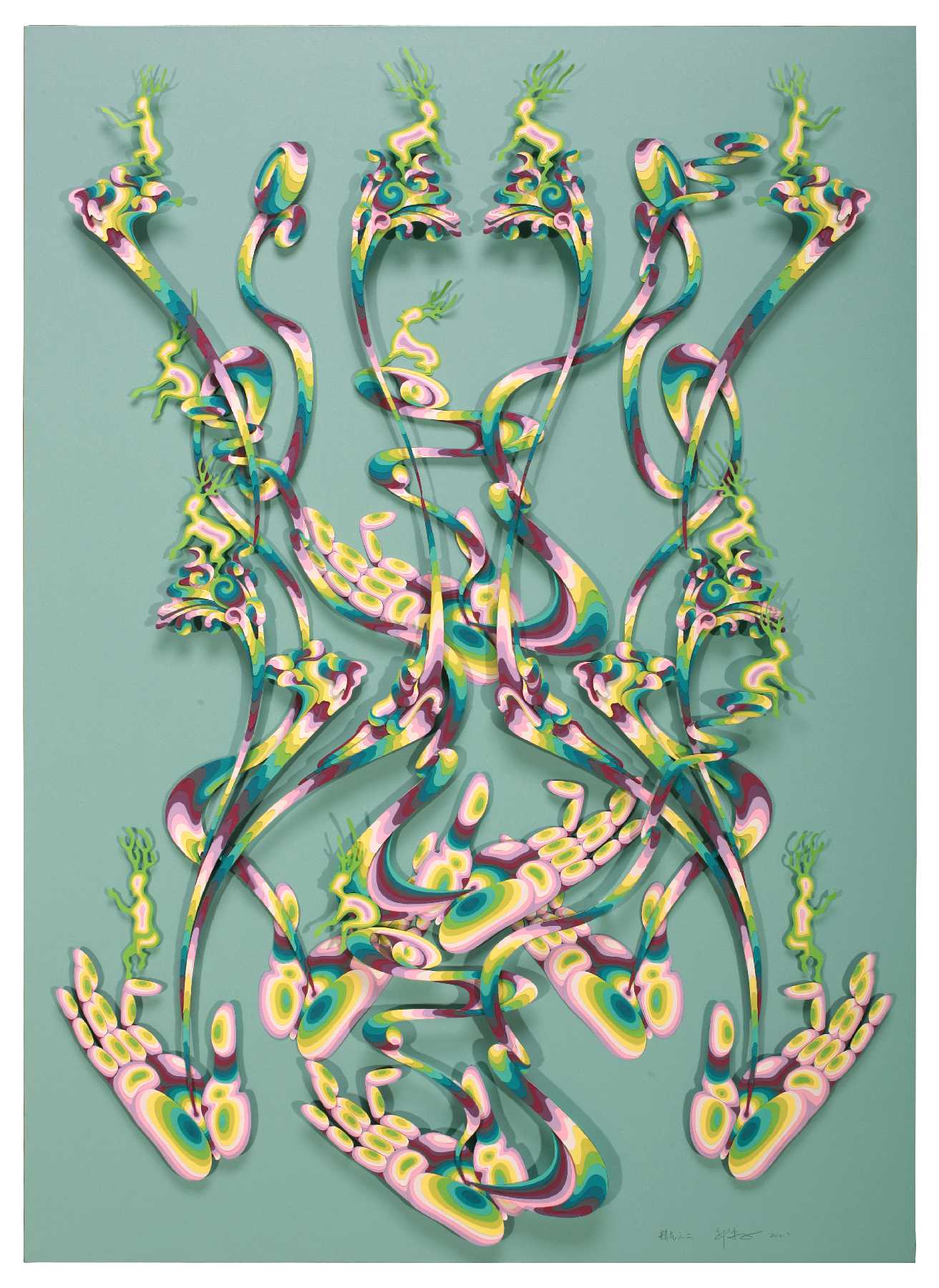
Rainbow Clouds – Vital Essence, Colored paper, hand-cut collage, 76 × 106 cm, 2012©Wu Jian’an
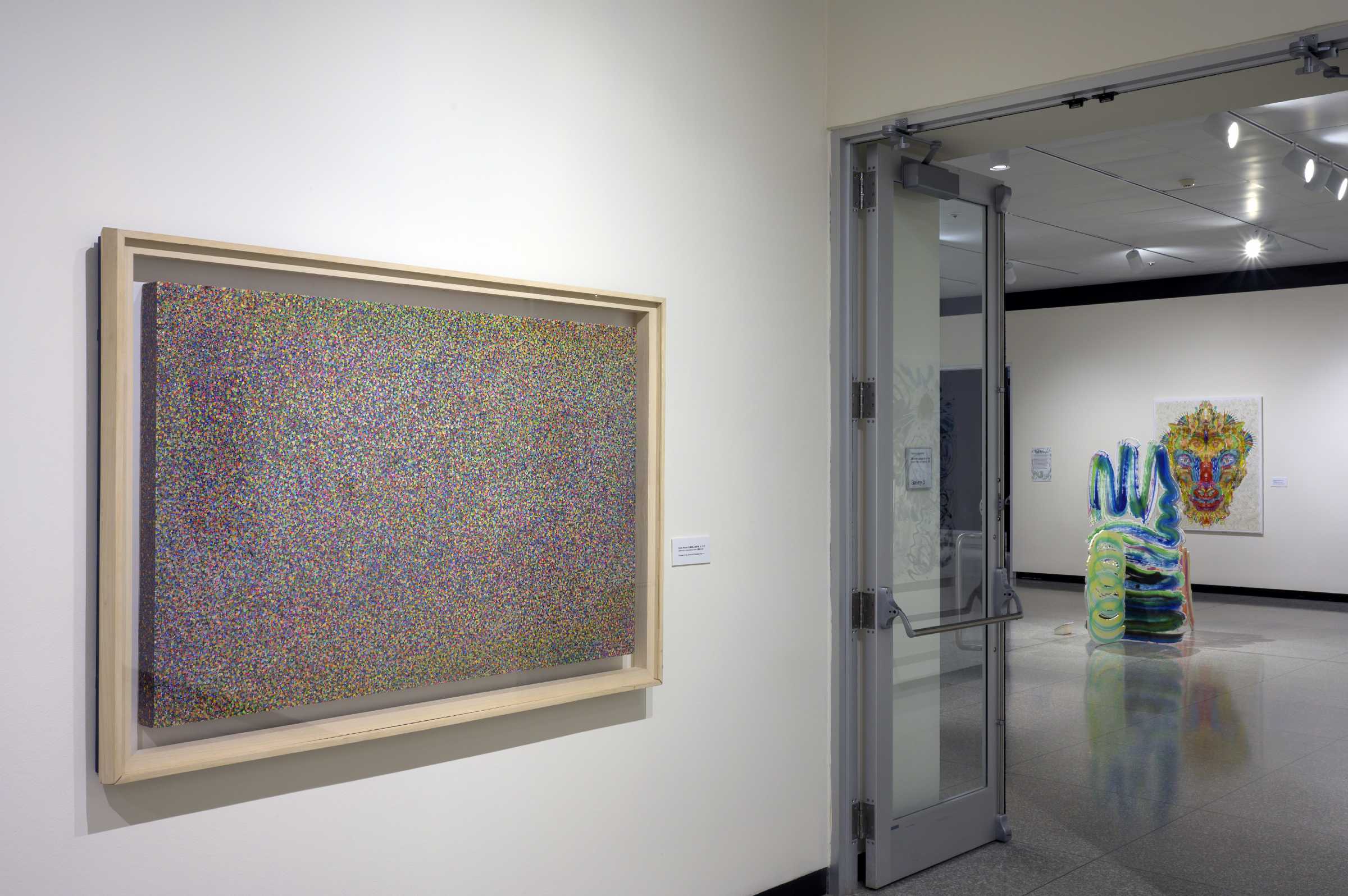
The first work in the “Transformation” section, Nirvana of the White Ape, is Wu Jian’an’s reimagining of the birth of the Stone Monkey from Journey to the West. In the composition, figures of various colors bear echoes of Western and Eastern salvational narratives and classical paintings, while an elderly white ape waits for its nirvana under their seemingly mournful gazes. Using this as a point of departure, the artist develops two parallel directions that each depict three progressively magnified “scenes”: on one side, figurative faces are enlarged to reflect on the relationship between individual features and the collective in his “human-creation” experiments; on the other, abstract points are magnified, exploring the order and boundaries between individuality and shared space through color and form. The successive magnifications unfold like an explosion, each offering a retrospective meditation on the birth of the Monkey King.
Wu Jian’an not only brings countless extraordinary beings before our eyes, but also transforms many well-known ancient legends into contemporary allegories. In his early works, the artist used paper-cutting to explore hidden patterns of connection; in Nirvana of the White Ape, he employs a stylized human vocabulary, and in Transformation, he draws inspiration from a story in the Chinese classic Journey to the West to create an environment using diverse media such as colored wax and watercolor, expressing his unique interpretation of the legendary tale. In his earlier practice, Wu often revealed mysterious truths through different combinations of a single element. In depicting the white ape’s nirvana, he applies stylized figures that reflect his deep understanding of classical Buddhist art. To convey the explosive energy of this moment—which triggers creation across humans and the universe—Wu developed a series of works that combine repeated depictions of human and animal forms with abstract correspondences.
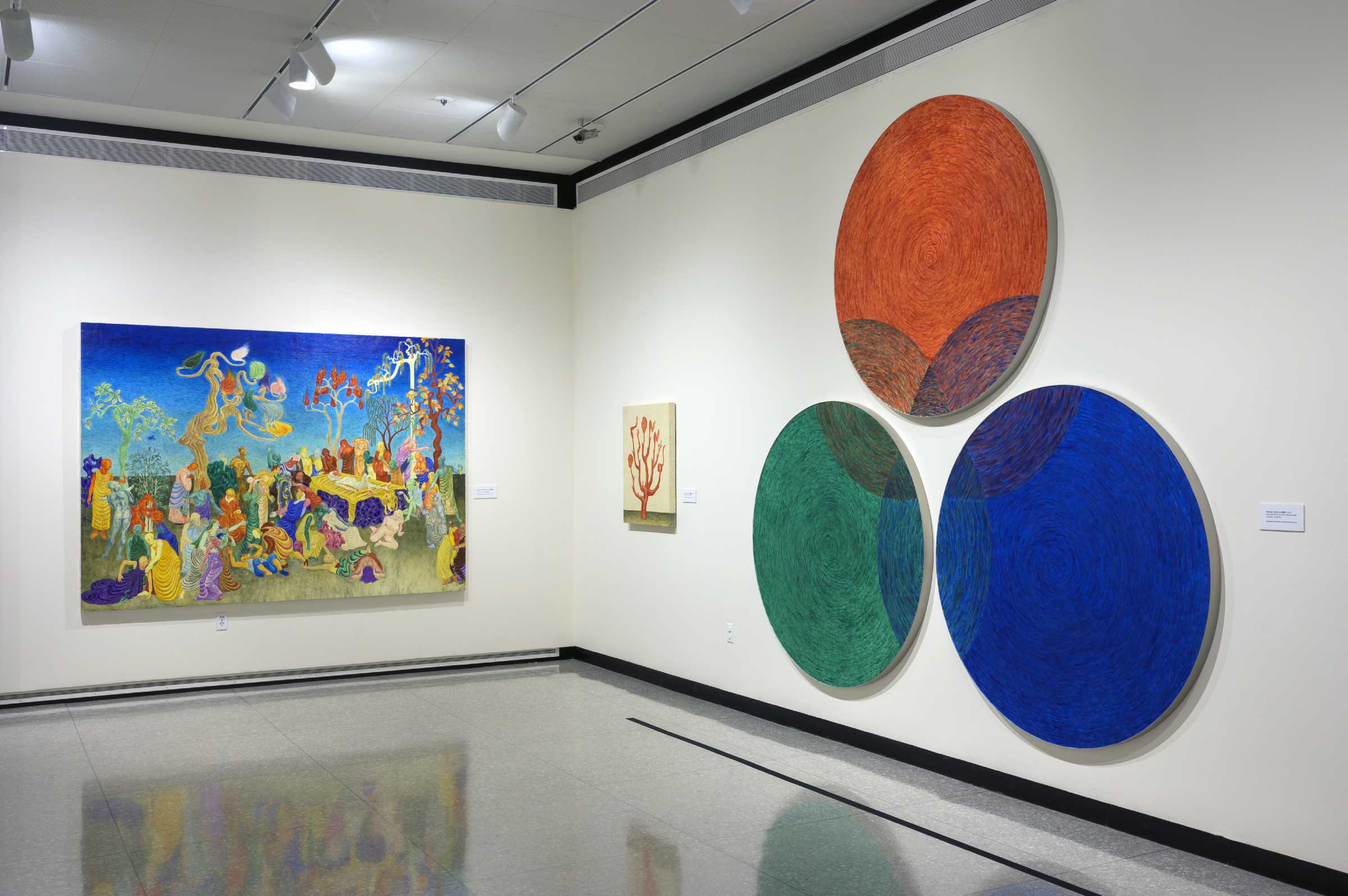
“A Bridge Between Two Worlds: Works by Wu Jian’an” Exhibition View ©️ Colleen_Woolpert
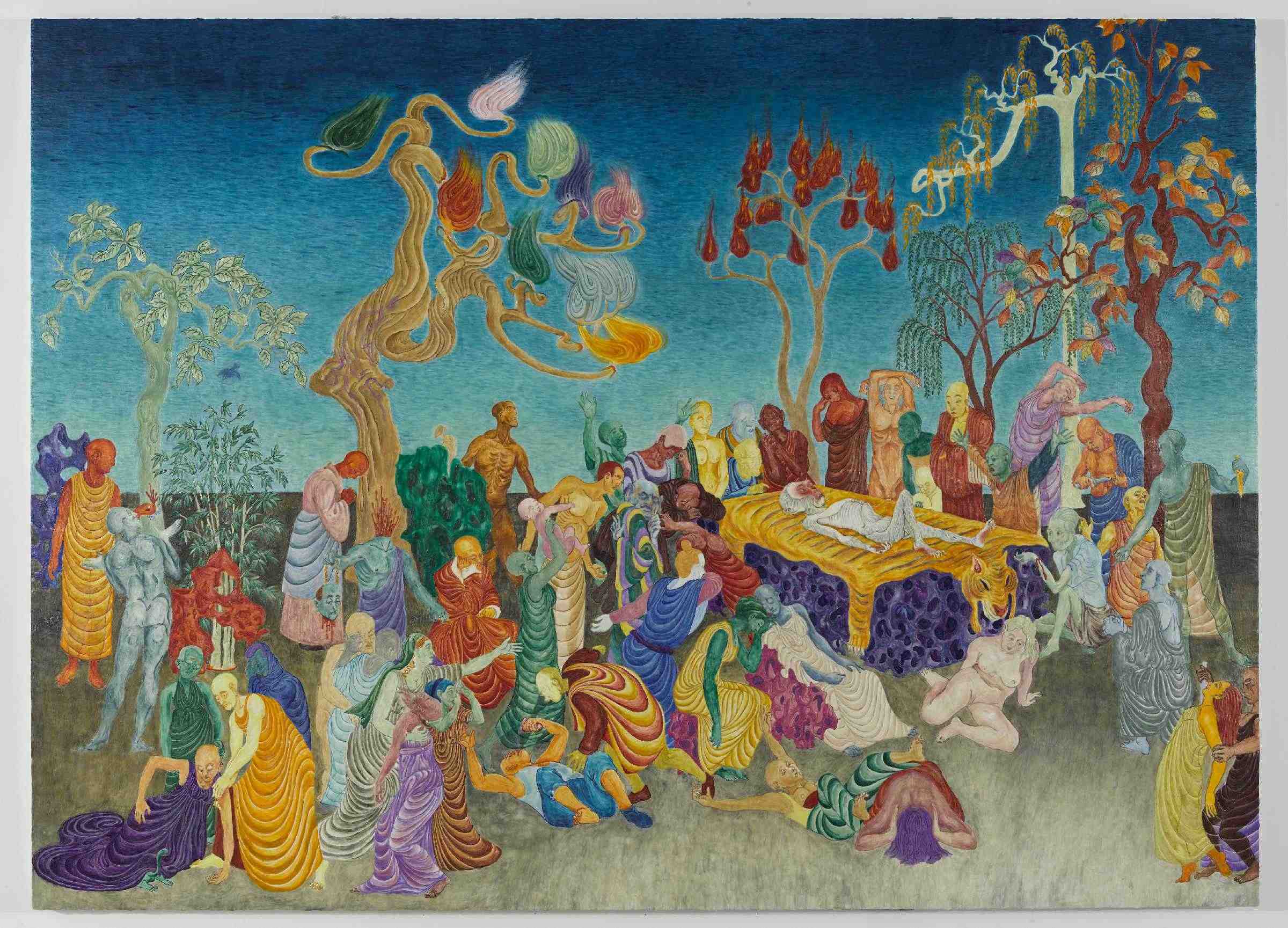
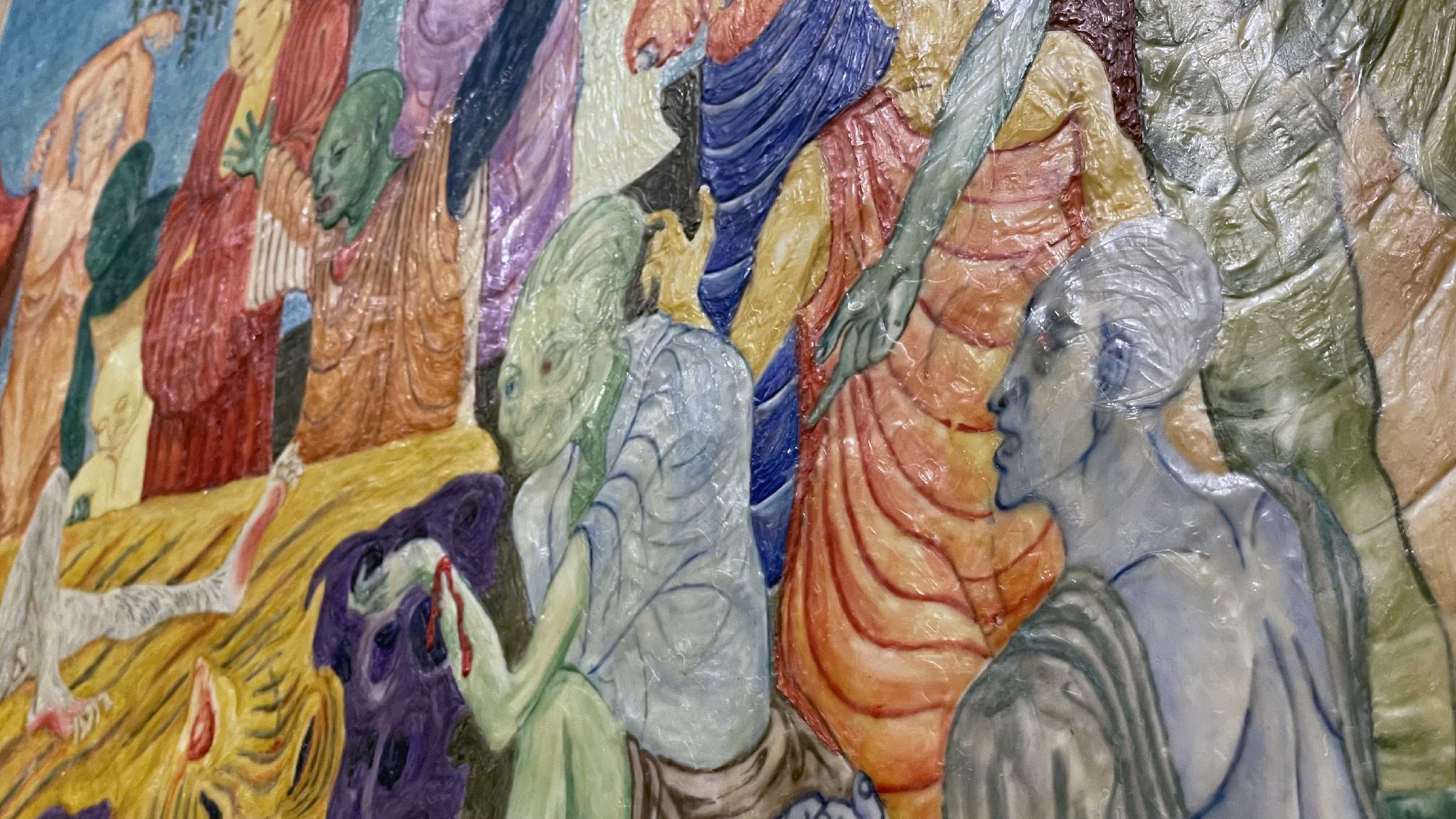
Nirvana of the White Ape,colored wax on wood panel,180x250cm, 2014© Wu Jian’an
In this exhibition, the figurative Nirvana of the White Ape is displayed alongside its series of abstract enlargements, with the contrast in form further amplifying the sense of transformation. Here, the white ape functions both as a creator, sparking the subsequent chain of stories, and as an object continually reshaped by humans through painting—becoming a reflection of social structures and the inner transformations of human consciousness.
“Transformation” refers to the process of moving from one state to another. In an artistic and cultural context, it often encompasses shifts in form, meaning, or perception. For the artist, it may involve experimentation with materials, techniques, or subject matter, resulting in new interpretations or expressions of ideas. Here, the concept of “Transformation” also highlights how the artist employs various media to retell ancient stories in innovative ways, updating understanding and emphasizing social themes. It can additionally relate to personal growth or societal evolution, reflecting how experiences and history unfold and transform over time.
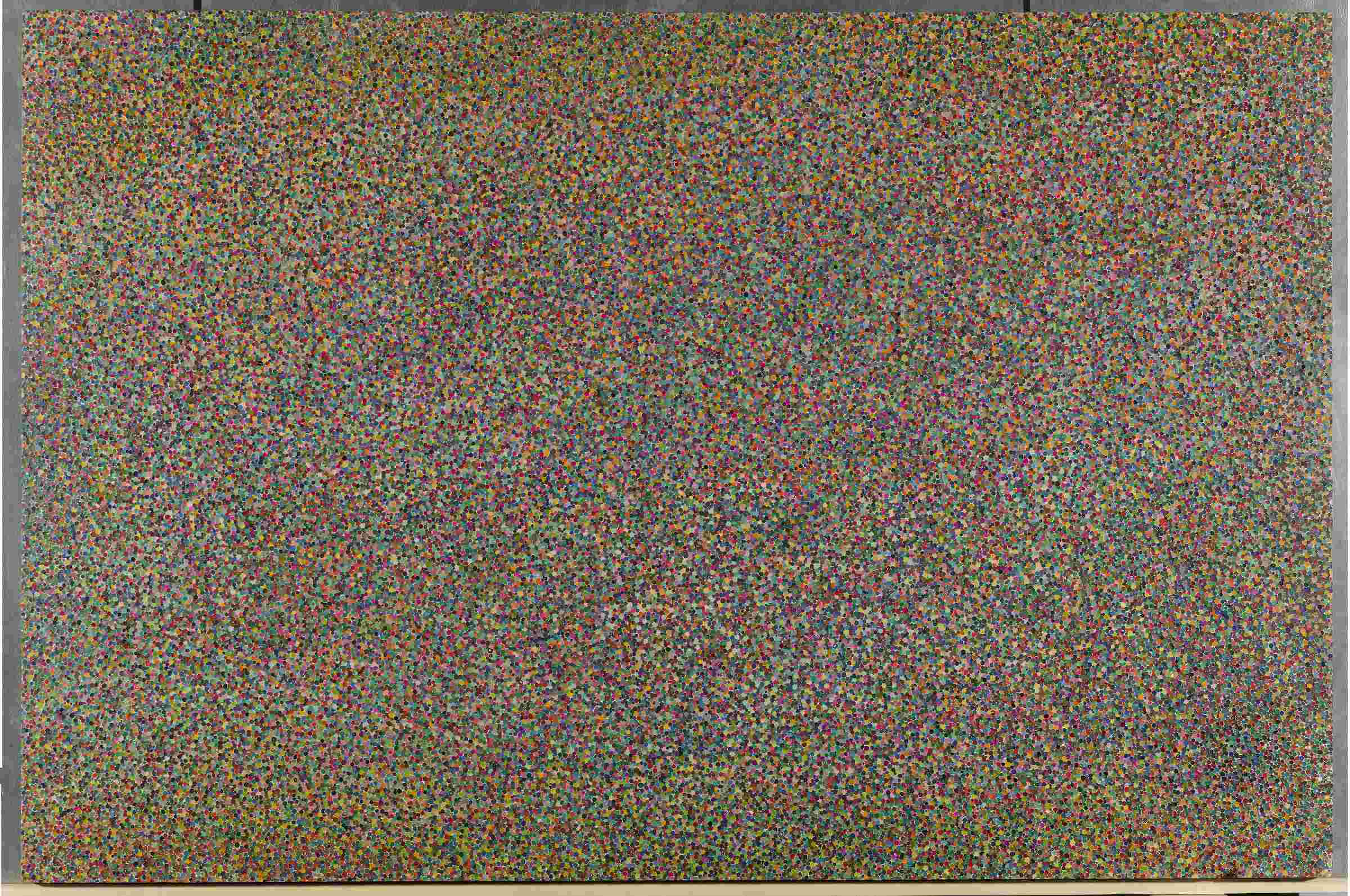
Color Points,Foam board, hand-colored with acrylics, 120x200x7cm, 2014© Wu Jian’an
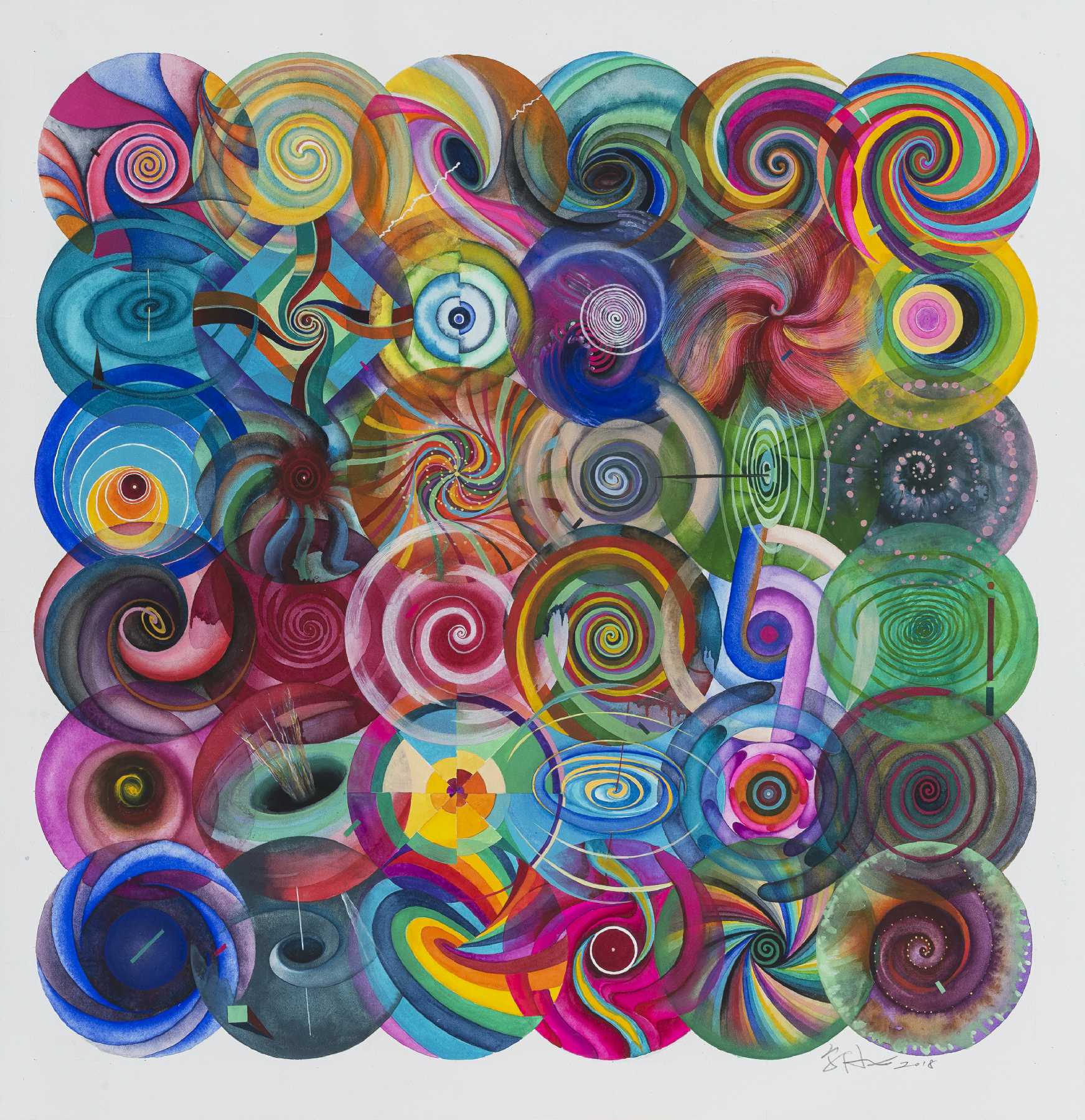
36 Color Balls, Watercolor on paper, 53x52cm, 2014© Wu Jian’an
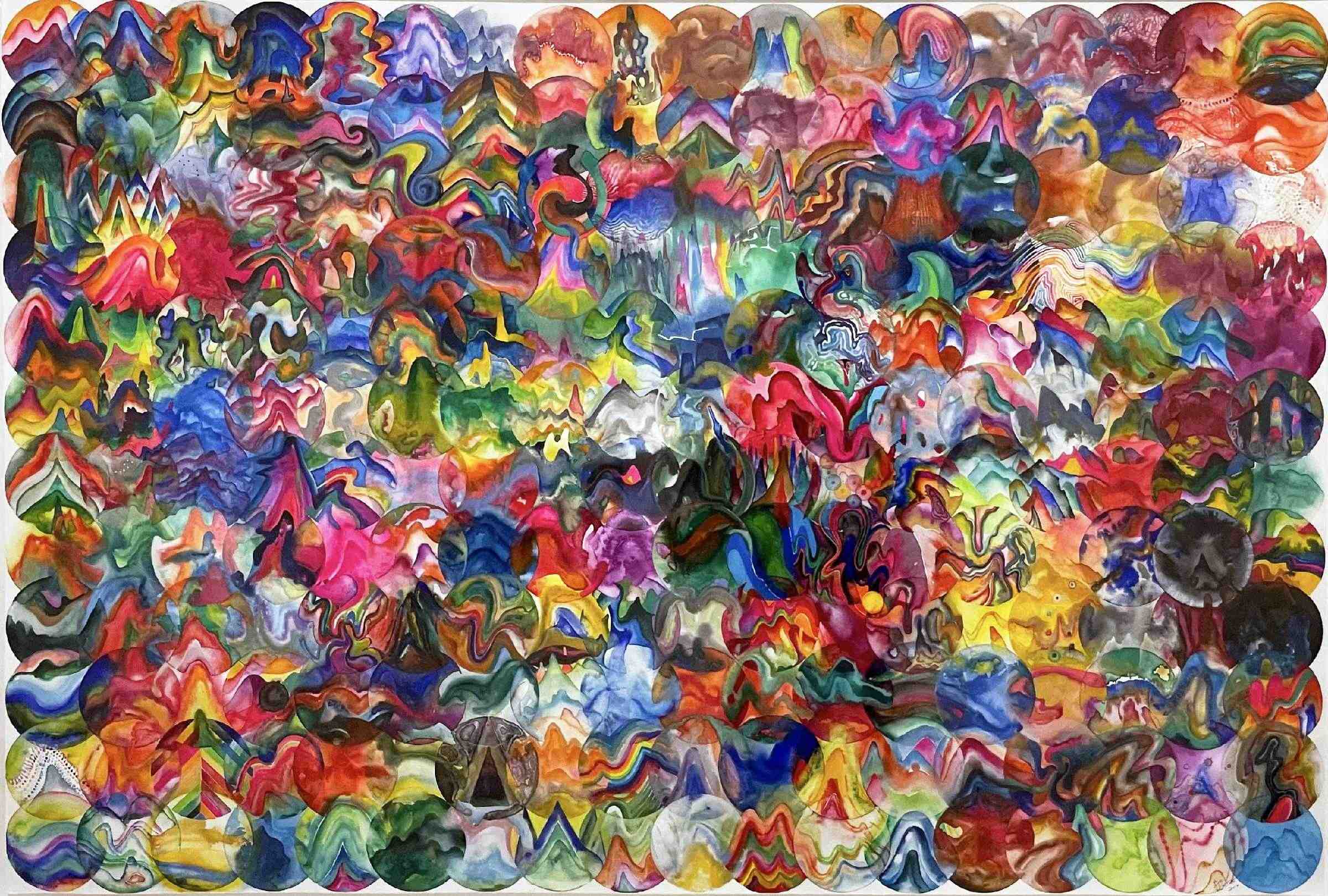
216 Color Balls(Big Dipper), Watercolor on paper, 89x131 cm, 2014© Wu Jian’an
Looking across the two exhibition halls, the artist’s relentless exploration of the relationship between the individual and the collective creates discernible links between his different series. Each cutout and each brushstroke serves as an analysis of the self and of humanity, gradually allowing both individual and collective to reach a more relaxed and liberated state. Through these works, we traverse the bridges that connect myth and reality, figuration and abstraction, East and West, human and nonhuman worlds. These are not isolated or abstracted paths; rather, they flow and intersect between the material and the spiritual, opening the world to us in a way that feels profoundly alive, through both physical action and cultural narrative.
Bridging Past and Present through Materials and Language
The curator notes that Wu Jian’an’s early paper-cut works, beginning with Daydreams, were pivotal to his artistic development. This longstanding folk craft sparked the artist’s desire to explore Chinese cultural heritage more deeply. On one hand, the compositional techniques of paper cutting—marked by mirroring and repetition—offered him significant inspiration and gradually became one of his recurring artistic languages. On the other hand, his use of cutting as a means of individual marking extended into other series: the layered rainbow papers, the hundreds of tiny figures with distinct identities, the incisions on buffalo hide, and the freely expressive brushstrokes all became independent units through the act of cutting, transcending the constraints of two-dimensionality and binary thinking. As the scale of his works expanded, their thematic foundations grew increasingly complex, drawing from a broad range of philosophical, religious, and visual traditions.
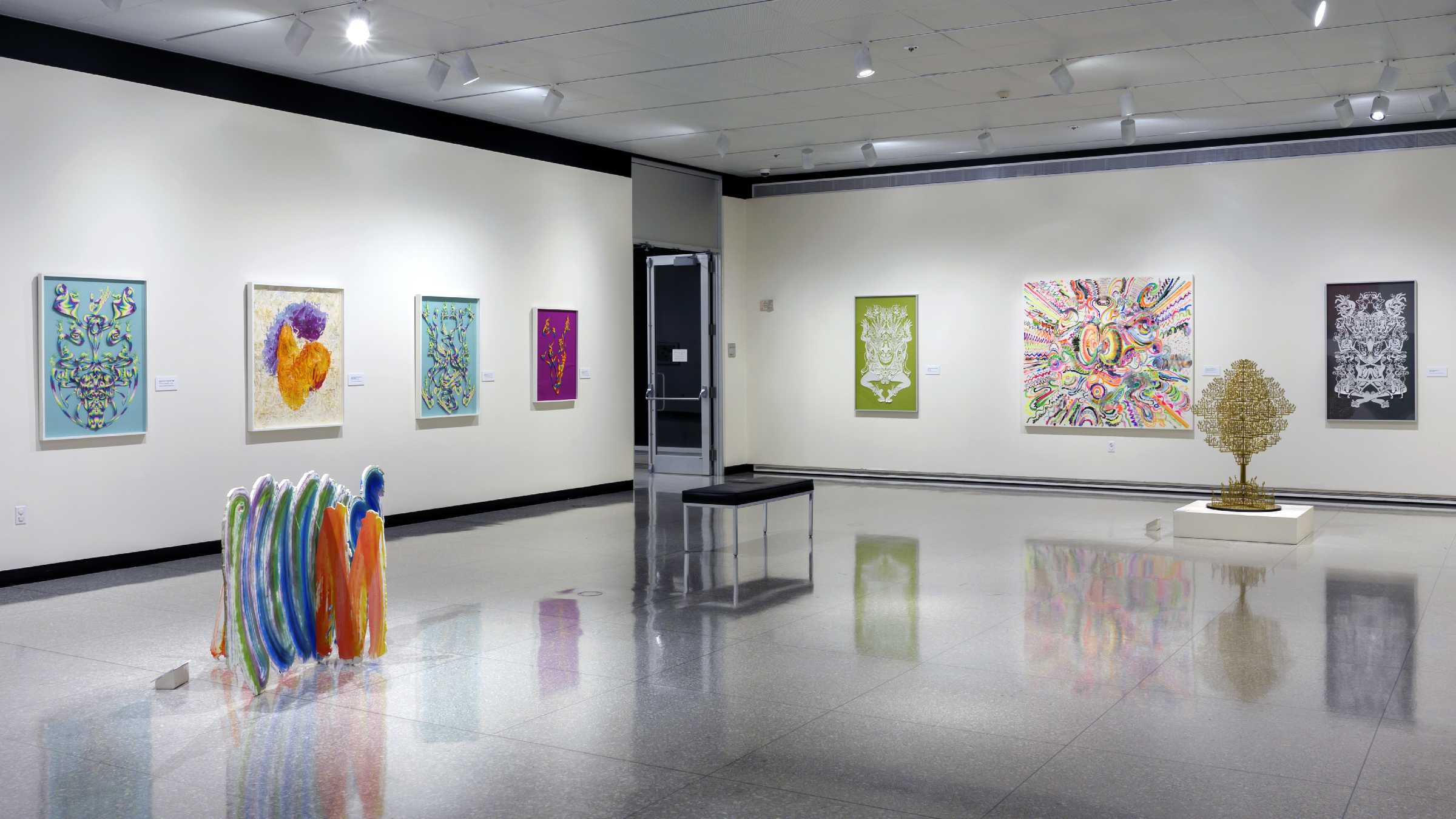
“A Bridge Between Two Worlds: Works by Wu Jian’an” Exhibition View ©️ Colleen_Woolpert
Meanwhile, Wu Jian’an has continuously explored the combination of traditional and non-traditional materials and techniques. In the 500 Brushstrokes series, the interplay of brush, xuan paper, and ink amplifies the subtle differences between each stroke, while the abstract automatism of mark-making and the meticulous act of cutting together preserve fragments of each individual “soul,” merging them into a harmonious new composition without the need for reconciliation. When the cut objects shift from paper to rigid metal or supple animal hide, the images he creates transform into three-dimensional entities imbued with a sense of “danger” or even “uncontrollability.”
In addition, at certain stages of his cutting or painting process, Wu employs materials such as beeswax, baking varnish, and acrylic, sometimes evoking the tactile quality of shadow puppets, and at other times producing a slightly uncanny effect that is both new and old. Through this hands-on experimentation and transmission of materials and techniques, Wu bridges past and present, striving to breathe new life into tradition and construct an artistic world that spans across time and space.
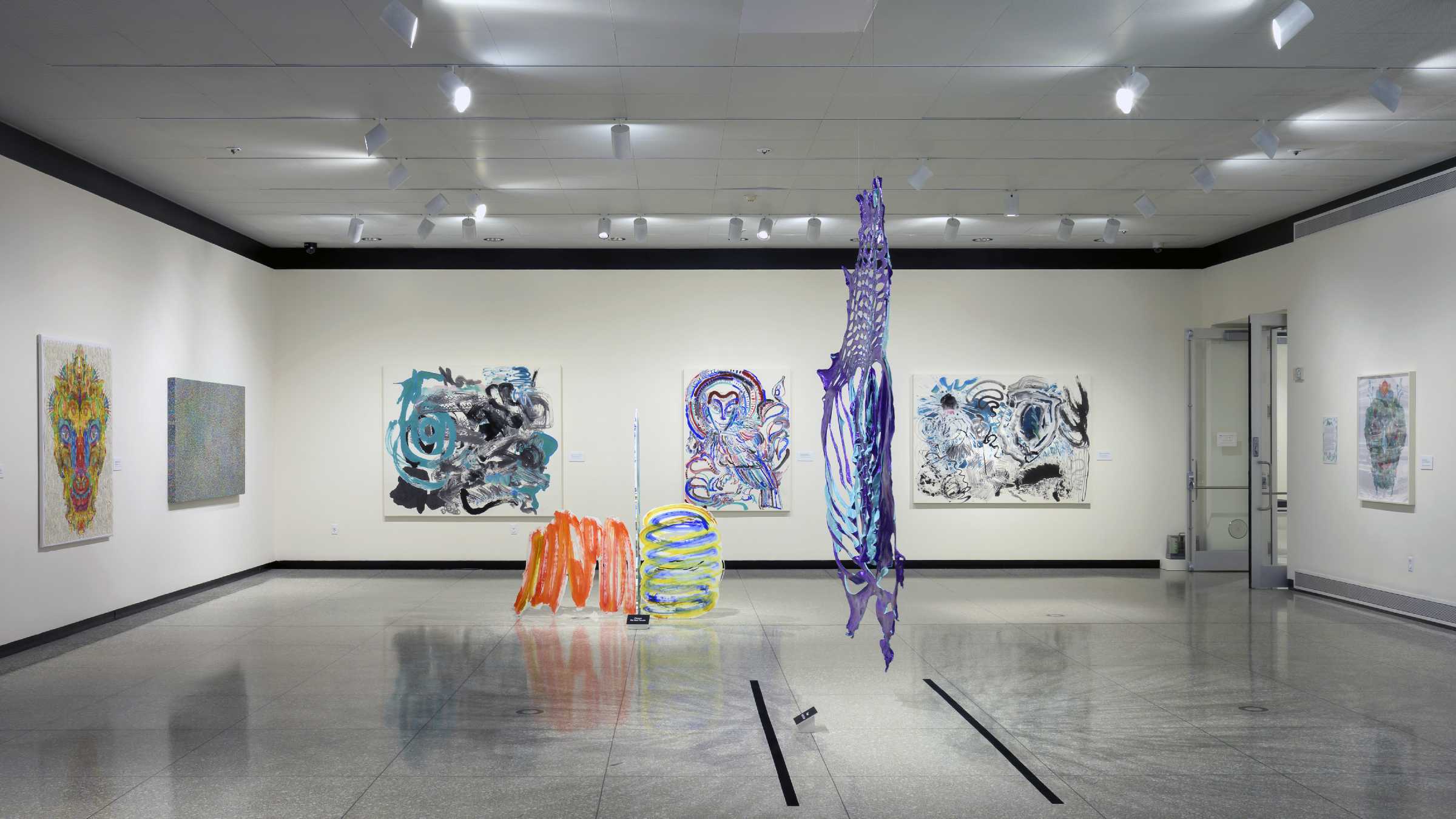
“A Bridge Between Two Worlds: Works by Wu Jian’an” Exhibition View ©️ Colleen_Woolpert
In Wu Jian’an’s understanding and practice, tradition and the contemporary are always inseparable; tradition evolves continuously from past to present rather than existing as opposites at the two ends of time. Accordingly, he has remained focused on employing direct and honest methods to transform the materials and languages of both ancient and present eras into powerful visual forms that carry profound cultural and social significance. The exhibition offers a perspective on the breadth of his creativity while also revealing a universal desire to preserve the past and celebrate stories handed down from generation to generation.
A Bridge Between Two Worlds demonstrates Wu Jian’an’s dedication to connecting history, innovation, and contemporary thought, encouraging audiences to engage with Chinese art and culture in new and inspiring ways.
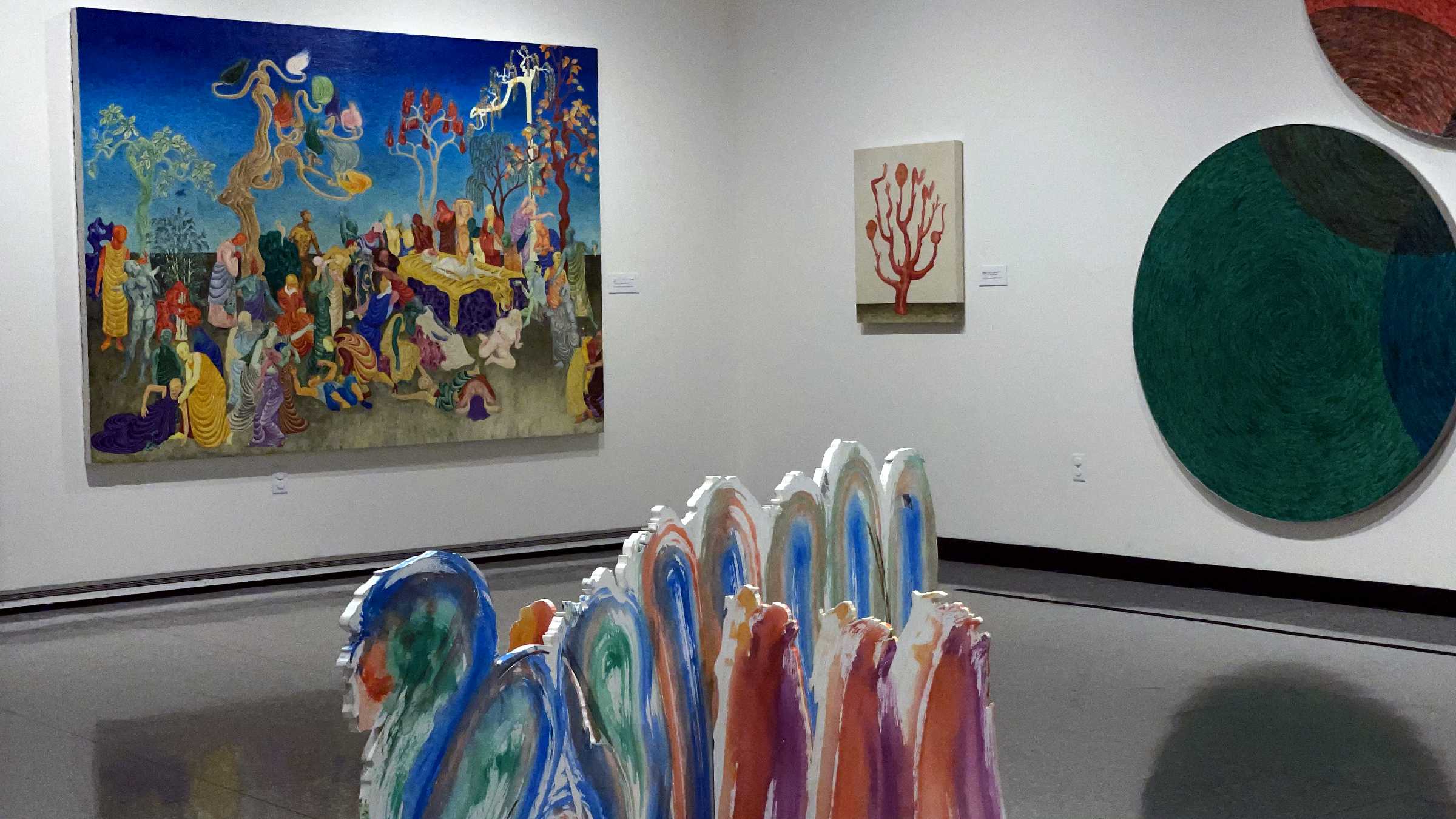
“A Bridge Between Two Worlds: Works by Wu Jian’an” Exhibition View ©️ Colleen_Woolpert
A Bridge Between Two Worlds: Works by Wu Jian’an
2023.9.16 - 12.31
Kalamazoo Institute of Arts, Michigan, US